
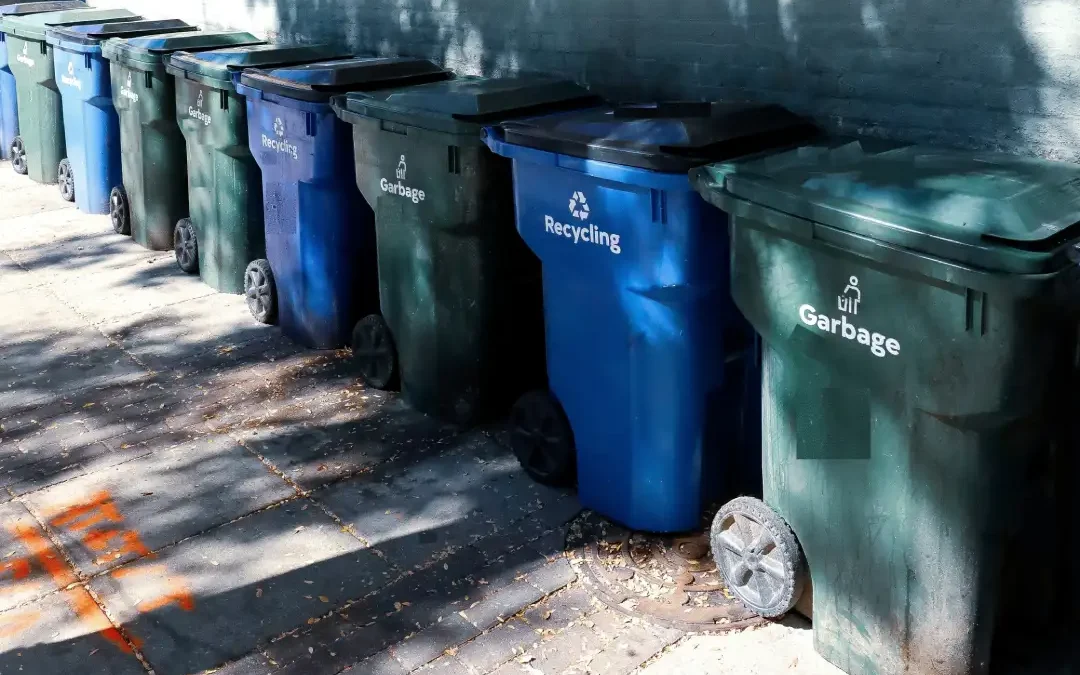
- Photo by Brandon Griggs on Unsplash(edited)
Table of Contents
The programs reviewed publish their rules in different places: an address lookup in one city, a municipal code section in another, a holiday notice for one specific week in a third. This guide works through those documents one question at a time: when the truck comes, what happens when it does not, how a holiday shifts the week, and how a large item gets collected.
Households on a municipal route and businesses with their own hauling contracts are covered separately because they are governed by different documents. One caveat runs throughout: every rule and figure below belongs to the specific program that published it, and none is a national standard.
What Sets Collection Frequency
Before you can schedule waste disposal on any kind of routine, you need to know how often the program collects, and that frequency is set by the program rather than by the household.
On the recycling side, frequency is partly an economic question. An archived EPA analysis of recyclables collection costs states that collecting half as frequently — every other week instead of weekly — can reduce collection costs by about 25 percent, assuming traditional two-stream set-outs. The cost table is more specific. For its two-sort columns at a 40 percent diversion rate, weekly collection of recyclables runs $58.67 per household per year versus $45.76 for every-other-week collection, a reduction of about 22 percent. For single-stream collection at the same diversion rate, the figures are $54.40 and $32.86, which the EPA calls a 40 percent reduction. The agency notes it no longer updates this information, so the dollar amounts are dated.
Scheduled waste management, on that evidence, carries a measurable per-household cost that moves with frequency.
Finding Your Pickup Day
Look Up the Address
Some programs answer the timing question with a lookup instead of a single citywide calendar. Milwaukee’s sanitation page has an address form and tells residents to enter an address for their scheduled collection dates and full schedule. A reader asking “what day is my trash pickup” is asking about one property, which an address-level tool answers. The same applies to the common search “when is trash day for my address,” where the address is key, and to “garbage pickup schedule near me,” which is also about one address rather than a neighborhood.
Trash and Recycling Can Fall on Different Days
Milwaukee routes its garbage and recycling services independently, and the city states that collections may or may not fall on the same day. It provides every-other-week recycling collection in carts to one- to four-unit households from April through November. Its winter schedule, December through March, remains varied to allow snow operations. A household served this way has two collection days to track, so you need both to schedule waste disposal reliably.
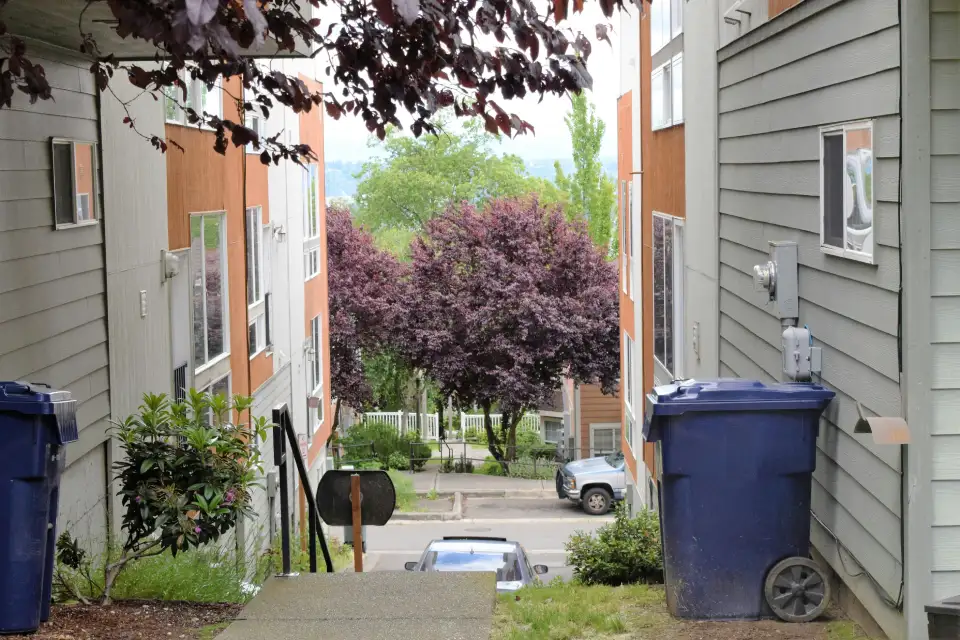
Photo by Fr0ggy5 on Unsplash (edited)
The Cart Comes Back In, Too
Milwaukee requires carts and bins to be returned to the storage area by 10 p.m., under two sections of the city code, and notes that failing to do so may result in violations and fines. Rancho Palos Verdes sets the same 10 p.m. deadline for taking empty carts off the curb, under Municipal Code Section 8.20.250.
Set-Out Times and What They Decide
A collection calendar names a day. In each of the programs reviewed here, the operating rules also name an hour, and in two of them the hour sits in the municipal code.
Grand Rapids, Michigan, asks whether a cart was put out before 7 a.m. on collection day and requires this for pickup. Milwaukee sets the same hour and adds two more rules: carts and bins must be at the collection point, meaning the alley or curb line, by 7 a.m. on pickup dates; carts must be 3 feet away from other objects; and carts and bins must be returned to storage by 10 p.m. under two sections of the city code. The page notes that failing to return them may result in violations and fines, with exceptions for winter weather delays.
Rancho Palos Verdes, California, works the other end of the same window. Under Municipal Code Section 8.20.250, carts may not be placed at the curb earlier than 4 p.m. the day before scheduled collection. Empty carts must be removed from the curb by 10 p.m. on collection day. The code sets an earliest placement time rather than a latest one, so residents can put the cart out any time from 4 p.m. the evening before.
Cincinnati works the same edge for large items, instructing residents to set them out the night before the scheduled collection day but no sooner.
So your city trash schedule can be two pieces of information rather than one: the day, and the hours around it. Where those hours sit in a municipal code, as they do in Milwaukee and Rancho Palos Verdes, they are a local ordinance rather than a service policy. [INTERNAL LINK: Garbage Can Sizes article]
When a Collection Is Missed
Report Windows and What the Program Will Actually Do
Grand Rapids asks residents to wait until after 3 p.m. before reporting anything because crews may still be working. It states all misses must be reported within one business day. Requests made after that will wait until the next scheduled pickup. The city is direct about the limit: reporting a miss does not guarantee a return to collect.
Check the Cart for a Tag First
Not every skipped cart is a missed garbage pick up. The same program asks residents to run through five eligibility questions before reporting, and lists the reasons a driver may have left a tag on the cart instead:
- the cart was not at the curb
- the cart was blocked or inaccessible, placed too close to something like a phone pole, a mailbox, or another cart
- the cart held open bags or loose items
- the account carried an unpaid balance
- service on the account was not active
The city tells residents to call if they do not find a tag, making the tag the first thing to check. It turns an unexplained missed garbage pickup into one of five specific questions. Grand Rapids also asks residents to check their balance for sufficient funds before reporting and lists an unpaid balance among reasons a cart may be tagged.
Reading a list like that changes how you schedule waste disposal week to week. The cart goes out before the deadline, nothing goes in loose, and — where a program sets a clearance rule, as Milwaukee does at 3 feet — the space around the cart stays clear. A missed trash pickup that failed one of those conditions may simply wait for the next collection since the city does not promise a return trip even for a reported miss.
Holidays, Weather, and Other Schedule Changes
Washington, D.C., has described its holiday schedule as a slide. In a notice dated April 2007, the public works director said the department collects from 110,000 households weekly, and that when a holiday occurs, trash and recycling collections slide to the next day. For once-weekly neighborhoods, about 75 percent of customers, a Monday holiday pushes Monday’s collections to Tuesday, Tuesday’s to Wednesday, and so on. Twice-weekly neighborhoods have their own mapping: in a Monday-and-Thursday area, a Monday holiday moves collections to Tuesday and Friday.
Milwaukee shifts its recycling collection forward after each holiday, much as it shifts garbage.
Neither mapping transfers to another city, so a program’s own holiday garbage pickup notice or annual calendar is what settles which holidays it observes and how it handles them. Trash collection on holidays depends on the program and on where the holiday falls in the week.
Weather arrives on a different schedule since it is announced rather than planned. In February 2014, after overnight snowfall that the District said made collections dangerous to staff and property, the District suspended trash and recycling for that Thursday. It told residents scheduled for that day to hold onto their material until the next scheduled collection. The same notice suspended delivery of new carts, which would resume once conditions allowed. The release named no makeup date or alternative drop-off. Such a notice is the only signal residents get, leaving nothing to schedule waste disposal around in advance.
Scheduling a Bulk or Special Pickup
Bulk Items May Go by Appointment
Large items do not necessarily travel on the regular route. Cincinnati’s bulk program is by appointment only and limits each household to five items per scheduled appointment. Furniture, major appliances, and exercise equipment qualify. Construction debris, tires and rims, batteries of all types, auto parts, propane and pressurized gas tanks, and anything over 6 feet tall are excluded, among other items on the program’s list. The program also sets a floor from the other direction: small or light household items that can be lifted easily — under 45 pounds, or smaller than roughly 4 feet by 4 feet by 4 feet — should not be scheduled for bulk collection at all.
Where a program works that way, a reader asking “when is bulk pickup” is asking a question the program does not answer in advance. There is no standing day to look up, only an appointment to request, so the schedule for bulk trash pickup is set when the appointment is made. A reader searching “when is big garbage day” is looking for a published neighborhood date, which an appointment-based program does not provide. (you can see Old Furniture Removal)
Collection Events for Electronics and Hazardous Waste
Dutchess County, New York, moves electronics and household hazardous waste through scheduled events rather than curbside service. It requires pre-registration, limits each event to the first 400 households, charges a $10 registration fee, and publishes both an acceptable-items list and a do-not-bring list ahead of each date. Those events are not free, so a reader hoping for a free electronic recycling day will not find one there.
The do-not-bring list is worth reading before loading the car. That county’s covers latex and oil-based paints, tires, motor oil, car batteries, and pharmaceuticals — all items its events will not take.
How Commercial Collection Is Scheduled
In New York City, most businesses hire a private carter rather than receiving a municipal collection day, which means a business and a household schedule waste disposal through different mechanisms.
The city’s sanitation department groups the available arrangements by service type: standard curbside service with scheduled pickups; a sharing arrangement for businesses producing less than 20 gallons over seven consecutive days, which lets adjacent businesses split one service; dumpster or compactor service using containers that hold 10 cubic yards or more; self-hauling, which requires a Class-1 self-hauler registration from the city’s Business Integrity Commission plus an arrangement to dump at a permitted private transfer station; and, where a business’s commercial waste zone has already been implemented or is in its sign-up period, an infrequent-generator registration that a business producing less than one gallon of commercial waste per week may be eligible for, after discussing eligibility with the department’s Bureau of Commercial Waste. The department states that registration is not effective unless it approves the application, and it publishes the full set of service types and their requirements.
Commercial waste collection, business waste collection, commercial waste removal, and a commercial waste service agreement all point at the same set of choices in that system: what a business arranges with a private carter, or hauls itself under a self-hauler registration.
Zoning is the part now changing. The department states that all businesses using a private carter for commercial waste removal services will need to sign a new contract with an authorized carter by the final implementation date of the commercial waste zone covering the geographic area where the business is located. Commercial refuse collection in a fully implemented zone therefore means choosing a carter the city has authorized for that zone.
Frequently Asked Questions
Why is my recycling collected less often than my trash?
An archived EPA analysis prices every-other-week collection of recyclables well below weekly collection on a per-household basis, which is one economic reason a program might choose it. Neither that analysis nor the programs cited here state why any particular program set its frequency. Milwaukee, for example, collects recycling from one- to four-unit households every other week from April through November.
I just moved in. When is my trash picked up?
Use the program’s own address lookup where one exists. Milwaukee’s page asks for an address and returns the scheduled collection dates for it. “When is the garbage pickup” is a question about a specific property, not about a city.
Does reporting a missed pickup always bring the truck back?
Not necessarily. At least one city states explicitly that a report does not guarantee a return to collect, and says that a request made after its stated window waits for the next scheduled collection.
What to do if you miss trash day?
Check the cart for a driver’s tag first, since it may explain the skip. If there is no tag and the cart was out on time, report it inside whatever window the program sets — one business day, in Grand Rapids. Otherwise keep the material contained until the next collection; at least one program lists open bags and loose items as a reason a driver may tag a cart and skip it.
The Bottom Line
A collection calendar is only half the rule in every program reviewed here. A set-out hour decides whether the day matters, and in Milwaukee and Rancho Palos Verdes that hour sits in the city code. A holiday notice decides which day it is that week. Weather can take a collection day out entirely, as it did in Washington in 2014, with no makeup date named. Bulk items and hazardous waste can run on requests and events rather than routes: Cincinnati takes bulk by appointment, and Dutchess County runs registration-only events. In New York City, most businesses arrange terms with a carter where a household reads a published schedule. The habit that covers most of it: find the program that serves your address, read its operating rules once, and schedule waste disposal around the hours rather than only the day.