
Table of Contents
Recycling tube fluorescents is a household errand with destinations that change at state lines. One state’s agency allows households to put used lamps in municipal waste; another bans household disposal.
This guide explains the published rules, who issued them, and what drop-off points accept or reject. Every rule below is attributed to its issuing body, and none is a nationwide requirement.
What Is Actually in the Tube
These lamps are handled apart from other glass because of mercury, sealed inside the tubing.
The EPA states the quantity comparatively: CFLs contain “a very small amount of mercury – less than 1/100th of the amount in a mercury thermometer.” That sentence is in a passage meant to reassure anyone who has broken one, not as a specification. For four-foot linear tubes, the agency publishes no per-lamp figure, so any number quoted for a T8 or T12 does not come from that agency.
Mercury is what the collection systems are built around. San Francisco Environment classifies fluorescent tubes and CFLs as hazardous waste and instructs residents: “Do not place these in any carts, bins, or dumpsters.”
Fluorescent recycling belongs to a different stream from bottle-and-can recycling, and fluorescent bulb recycling programs are organized accordingly. Recycling fluorescent bulbs, recycling fluorescent tubes and fluorescent tubes recycling all describe one operation that takes straight lamps and compacts together, as does recycling fluorescent light tubes.
Which Bulb Do You Have
Of the bulbs that turn up in a house, only the mercury-containing ones belong in this article.
Tubes and CFLs contain mercury. Fluorescent tube disposal, compact fluorescent recycling, compact fluorescent lamp recycling, CFL recycling, and CFL bulb recycling all describe mercury-containing lamps, regardless of shape: straight four-foot tube, U-tube, circline, and screw-in spiral. Shape does not determine the limits; Washington’s daily caps follow the base and technology, as the next section shows.
Incandescent and halogen bulbs do not. San Francisco Environment states that “Incandescent bulbs and halogen bulbs do not contain mercury,” and that residents, businesses and property managers can put them in the black landfill bin. King County, Washington, lists “Halogen light bulbs can go in the garbage” under the heading “Not accepted at hazardous waste collection sites.”
So can you recycle incandescent bulbs? San Francisco offers no incandescent recycling: there, the instruction to dispose incandescent light bulbs is the landfill bin, and a request to recycle incandescent light bulbs is not one its hazardous waste program handles. King County’s page covers halogen only; a request to recycle halogen light bulbs gets the same answer, and halogen lamp recycling and halogen bulb disposal come to the same thing.
LEDs are a separate question and local guidance on them varies, so check yours. Recycling tube fluorescents and handling a dead LED are not the same problem.
Can You Put Them in the Trash?
The published answers differ by state, and two of them point in opposite directions.
The federal rule leaves it open. Household waste is excluded from hazardous waste rules at 40 CFR 261.4(b)(1), and the universal waste system is offered to households, not imposed. The regulation at 40 CFR 273.8 opens: “Persons managing the wastes listed below may, at their option, manage them under the requirements of this part:” followed by household wastes exempt under 261.4(b)(1) of the same type as universal wastes. The key word is “option.”
Illinois states it directly. The Illinois EPA page reads: “Households may dispose of their used lamps as municipal waste.” The same page urges households to do better anyway, recommending a household hazardous waste collection or a listed recycler.
Massachusetts prohibits it, and names households in the text. The disposal ban at 310 CMR 76.04(1) reads: “No person, household, school, healthcare facility, state or municipal government or business (including solid waste landfills, municipal waste combustors, and solid waste handling facilities) shall knowingly dispose of a mercury-added product in any manner other than by recycling, disposing as hazardous waste or using an alternate method approved by the Department.” The definition at 76.02 covers “electric lamps.”
That regulation also provides an alternative method for one situation. Under 76.04(2)(a)3, “Accidentally broken mercury lamps that are excluded from the hazardous waste regulations pursuant to 310 CMR 30.104(2)(g) [household waste exclusion] may be disposed of as solid waste.”
A Minnesota county states it is illegal. Hennepin County’s disposal guide says: “It is illegal to put fluorescent light bulbs in the garbage.” That page speaks for the county; a reader elsewhere in Minnesota needs their own county’s or the state agency’s wording.
So can you throw away fluorescent tubes, and can you throw away fluorescent bulbs? Illinois publishes a yes, Massachusetts a prohibition. Discarding fluorescent light bulbs, disposing of fluorescent bulbs and the disposal of fluorescent light bulbs are governed where you live, and the EPA’s instruction to anyone cleaning up a break is to “check with your local government about disposal requirements in your area.” How do you dispose of fluorescent bulbs, how do you dispose of fluorescent light bulbs and how to dispose of fluorescent lights have a local answer before a general one, and recycling tube fluorescents is no exception.
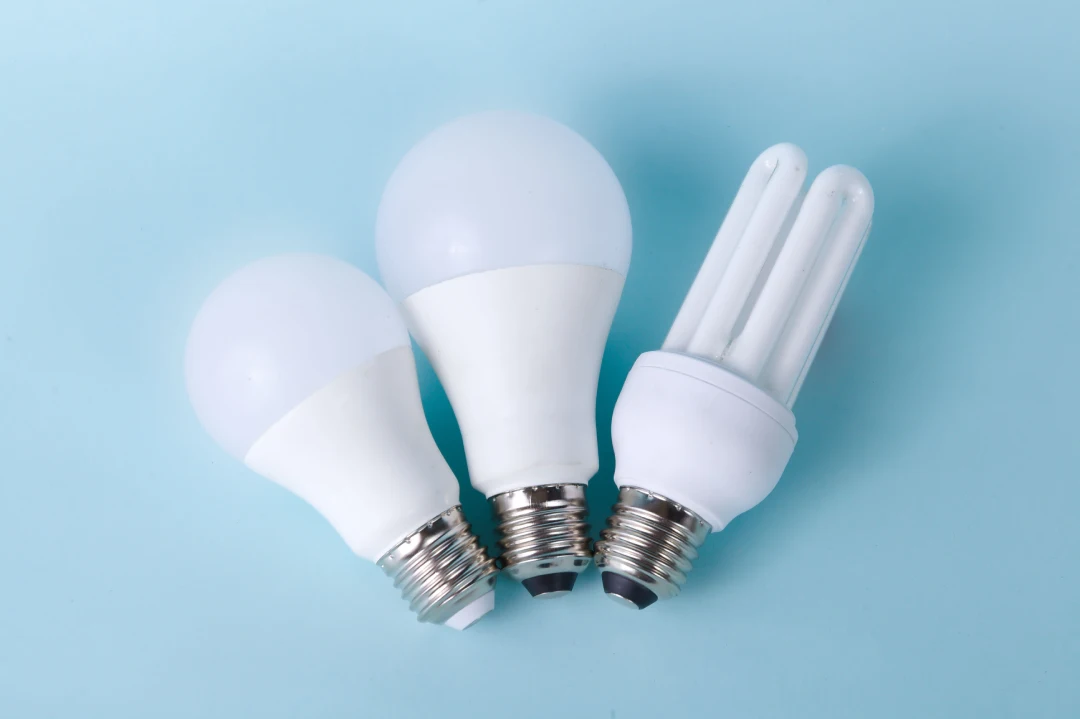
Photo by Riki Risnandar on Pexels
Where Fluorescent Tubes and CFLs Actually Go
One state tells households they may put a used lamp in the trash. Another names households in a disposal ban. This guide sets out what the published rules say, who issued them, and the daily limits a drop-off point sets before you load the car.
Where to Take Them, and the Limits They Set
Four kinds of route appear in the programs quoted here, and each that publishes a ceiling sets it on its own terms.
The county hazardous waste facility is where to recycle fluorescent tubes and where to dispose of fluorescent tubes in counties that run one. Hennepin County, Minnesota, accepts fluorescent lamps at no charge at its own drop-off facilities, capped at 25 bulbs per household per 12-month period, excluding bulbs used for business. Where to recycle fluorescent tube bulbs, where to recycle fluorescent bulbs and where to recycle fluorescent light bulbs all lead to the same building there.
A periodic collection event. Wayne County, Michigan, publishes four dates for 2026 — April 11, June 27, August 29, and October 10 — each “8am to 1pm”. The sites “are open to all Wayne County residents & proof of County residency will be required.” “A valid driver’s license or other ID must be shown to verify Wayne County residency.” The accepted list includes “Fluorescent & CFL bulbs (all types).” Where to get rid of fluorescent tubes or where to get rid of fluorescent light bulbs in such a county is a date, not an address, and where do i dispose of fluorescent tubes between those dates means storing them.
A manufacturer-funded take-back program exists in some states where law requires lamp producers to run collection programs. Sites are at retailers, waste facilities, and collection events. Washington charges “currently 95 cents per bulb,” added at retail. Its Department of Ecology states individual limits: “an unlimited number of mercury-containing compact fluorescent lights (CFLs) that contain a screw base (any length),” “15 pin-based compact or linear fluorescent lights (up to 8-feet in length),” and “two High Intensity Discharge (HID) lights per day.” The page reports the program is between administrators — “With PCA’s exit as program administrator, there is no longer a state approved stewardship plan” — and advises residents to “call before you go, as we are updating database systems to reflect program changes.” So where can i recycle fluorescent tubes, where can i dispose of fluorescent tubes and where to recycle CFL bulbs can have the same answer in such a state, with the CFLs uncapped and the tubes counted — but call first.
A collection from the home. San Francisco Environment tells residents they can request a free household hazardous waste pick-up, and gives a number to schedule one after a breakage.
How to dispose of fluorescent tubes and how to dispose of fluorescent light bulbs depends on which of these four options your county operates. Recycling tube fluorescents is easy; finding the open door is the work. Where can i recycle fluorescent bulbs, where can you recycle fluorescent tubes, where can you dispose of fluorescent light bulbs, where to dispose of fluorescent bulbs, where to dispose of fluorescent light bulbs and where can i recycle fluorescent light tubes have no single national answer, which is why every agency quoted here directs you to your own county first.
Getting Them There Intact
A broken tube is a different object from an intact one, and the point of the trip is to arrive in one piece.
Hennepin County gives specifics: keep bulbs in original packaging, or cushion them with blankets, towels, or newspaper if not. The county also states “Do not tape bulbs together,” asks that bulbs and ballasts be separated from fixtures before arrival, and adds that “Staff will not separate the ballasts from light fixtures for you.”
What to do with fluorescent tubes that are already broken depends on the route. Hennepin County takes them: “Hennepin County also accepts broken fluorescent bulbs – place the broken pieces in a sealed plastic bag first.” What to do with old fluorescent tubes stored in a garage for years is the same question, handled the same way.
If One Breaks
The EPA publishes step-by-step guidance for a broken CFL indoors.
Before cleanup. “Have people and pets leave the room.” “Air out the room for 5-10 minutes by opening a window or door to the outdoor environment.” “Shut off the central forced air heating/air-conditioning system, if you have one.” Gather stiff paper or cardboard, sticky tape, damp paper towels or disposable wet wipes for hard surfaces, and a glass jar with a metal lid or a sealable plastic bag.
During cleanup. The instruction set in capitals is “DO NOT VACUUM,” because vacuuming “could spread mercury-containing powder or mercury vapor.” Scoop glass fragments and powder with the cardboard, lift what remains with sticky tape, and put the used tape in the jar or bag. The page adds that vacuuming “is not recommended unless broken glass remains after all other cleanup steps have been taken.”
After cleanup, “Promptly place all bulb debris and cleanup materials, including vacuum cleaner bags, outdoors in a trash container or protected area until materials can be disposed of.” Then, “Next, check with your local government about disposal requirements in your area, because some localities require fluorescent bulbs (broken or unbroken) be taken to a local recycling center. If there is no such requirement in your area, you can dispose of the materials with your household trash.” This instruction refers to debris and cleanup materials, not intact lamps. Keep airing the room and leave heating or air conditioning off for several hours if possible.
San Francisco Environment ends the same situation differently: bag the glass, the white powder and the paper towel, then call for a free pickup or bring it to the city’s household hazardous waste facility.
Recycling tube fluorescents that have already shattered starts with that bag. What to do with fluorescent bulbs and what to do with fluorescent lights after a breakage is a cleanup question before it is a disposal question, and the full federal procedure runs longer than the summary above.
If You Run a Business
A business lamp is not household waste, and the household exclusion at 261.4(b)(1) does not reach it.
The Illinois EPA sets out the choice for commercial and industrial facilities: a facility follows either the state’s universal waste rule or full hazardous waste requirements, and “You must choose one of these options.” Under this, “Handlers and transporters are prohibited from disposing, treating, recycling or diluting waste lamps,” must send lamps to a facility that accepts universal waste, minimize breakage, and “immediately clean up broken or damaged lamps.”
The federal rule at 40 CFR 273.8 extends its elective treatment to very small quantity generator wastes exempt under 262.14 — a test of quantity, not company size. The same section adds a condition: anyone who commingles those wastes with universal waste regulated under Part 273 must manage the whole mixture under Part 273. And on the household side, Hennepin County’s free drop-off excludes bulbs used for business purposes.
Frequently Asked Questions
How do you recycle fluorescent bulbs?
You take them unbroken to a facility that accepts them: a county hazardous waste site, a collection event, a manufacturer-funded drop-off point, or in at least one city, a home pickup. The answer to how do I recycle fluorescent bulbs in a given county is published by that county, with its limit included.
Can you throw away fluorescent tubes?
It depends where you live. Illinois EPA states households may dispose of used lamps as municipal waste. Massachusetts regulation states no person or household may knowingly dispose of a mercury-added product except by recycling, hazardous waste disposal, or a Department-approved alternative.
How do i dispose of fluorescent tubes if my county has no facility?
Look for a periodic household hazardous waste collection event, or in product-stewardship states, a manufacturer-funded drop-off point.
Do CFLs follow the same rule as tubes?
They hold the same mercury, and the disposal rules quoted here treat them together. Collection limits differ: Washington’s program caps pin-based and linear lamps at 15 a day while accepting screw-based CFLs without limit. Where do i recycle CFL bulbs, where can you recycle CFL bulbs and where to recycle compact fluorescent bulbs are answered by the facility that takes tubes, as are disposing of CFL bulbs, disposing of compact fluorescent bulbs and dispose of compact fluorescent bulbs.
What about incandescent and halogen bulbs?
San Francisco Environment states they contain no mercury and can go in the black landfill bin. King County lists halogen bulbs as not accepted at hazardous waste collection sites and says they can be thrown in the garbage.
Is a broken tube still accepted?
At some facilities, yes. Hennepin County accepts broken fluorescent bulbs if the pieces are sealed in a plastic bag first. Disposing of fluorescent tube light bulbs that have cracked depends on your local program.
The Bottom Line
One category of these lamps is being withdrawn from sale, though households may still own many. Vermont’s 10 V.S.A. § 7105(g) states, “Beginning on January 1, 2024, no four-foot linear fluorescent lamp may be offered for final sale, sold at final sale, or distributed in Vermont as a new manufactured product,” with exemptions at § 7105(i)(7) for image capture, projection, and several high-ultraviolet categories. The same Act requires manufacturers to continue their collection program for lamps already sold. Recycling tube fluorescents in such a state means clearing out what is already installed. Find your county’s published rules, check limits before loading the car, and keep the glass intact.