
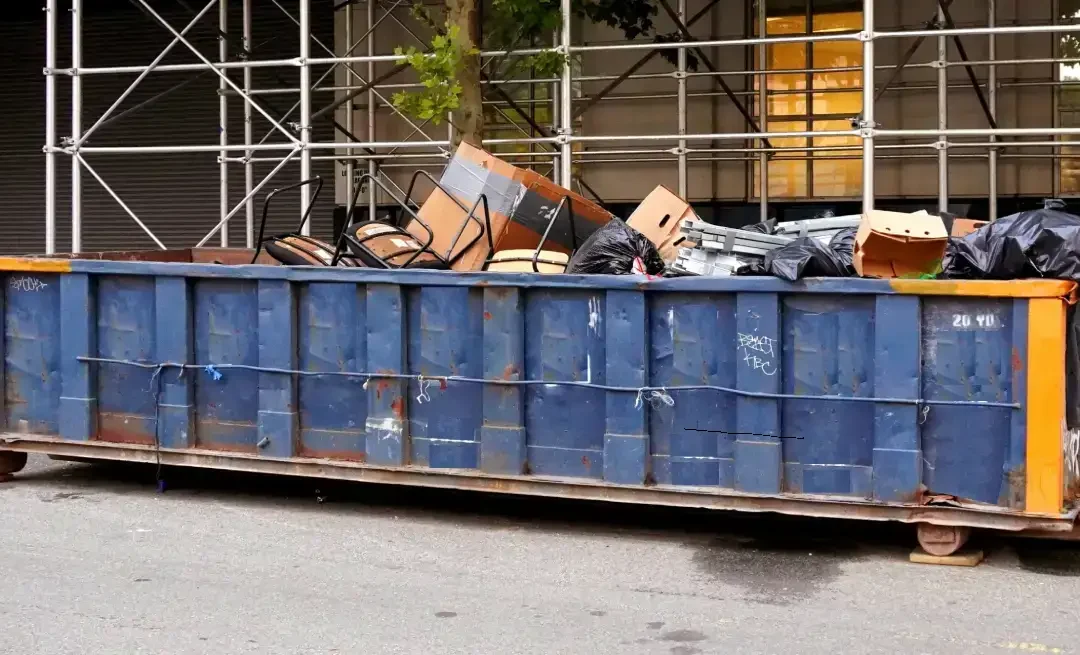
Photo by Bertrand Colombo on Unsplash (edited: company name and contact details removed)
Table of Contents
A 20 yd dumpster is the middle size in most roll-off fleets. It is large enough for a kitchen remodel, a roof tear-off on a modest house, or a full garage cleanout but small enough to fit in a standard residential driveway. That balance is why many homeowners and contractors start their search with this size.
This guide explains the container's measurements, how much it holds by volume and weight, which projects it suits, what you cannot throw in it, and where the debris goes after pickup. It also covers factors that affect the price without recommending any particular hauler.
20 Yard Dumpster Dimensions and Measurements
The most common 20 yard dumpster dimensions are 22 feet long, 7.5 feet wide, and 4.5 feet high. Sizes vary slightly by manufacturer, so one hauler's container may differ a little from another's. If your space is tight, ask for the exact 20 yard dumpster measurements before delivery day.
The footprint is only part of the story. The truck needs room to back in and tilt its bed. One provider estimates delivery trucks need at least 60 feet of straight clearance to set the container down safely. Low tree branches, overhead wires, and narrow gates can block placement, so check the path from the street to the drop spot in advance.
The "20 yard" label refers to volume, not length. The container holds roughly 20 cubic yards of material, which is where the alternate name 20 cubic yard dumpster comes from. Note that the listed measurements are generally outside dimensions. Because of wall thickness, the frame, and the sloped ends on many containers, multiplying length × width × height gives a larger number than the rated volume.
How Much a 20 Cubic Yard Dumpster Holds
In practical terms, a 20 yard dumpster holds about six pickup truck loads of debris. This is a useful mental picture when estimating a project.
Volume is only one limit. Each container also has a weight allowance. The average weight limit for this size is 2 to 3 tons, or 4,000 to 6,000 pounds. Light, bulky items like furniture and cardboard usually fill the space before reaching that limit. Dense materials work the other way: concrete or dirt can reach the weight limit before the container is full. A single cubic yard of concrete weighs roughly two tons, so only a small pile can use up the full allowance.
When the load exceeds the limit, the hauler charges an overage fee based on extra tonnage. Badly overloaded containers can be unsafe to transport and may need partial unloading before pickup.
Projects That Fit a 20 Yd Dumpster
This size covers a wide range of mid-sized jobs. Typical uses include:
-
- Bathroom remodels and small home renovations
- Basement and attic cleanouts
- Garage cleanouts and downsizing before a move
- Deck removal
- Tree removal and yard waste cleanup
Roofing is another common use. Asphalt shingles are heavy, so a large roof can reach the weight limit before the container looks full. For a big roof or a job mixing shingles with old decking, confirm the weight allowance before loading.
For whole-house cleanouts or major demolition, a container larger than the standard 20 yard dumpster size is usually the better fit. For a single-room project with mostly light debris, a smaller one may be enough.
What You Cannot Put in a Dumpster
Every hauler publishes its own list of banned items, but several categories are refused almost everywhere, either because of federal, state, or local rules or because landfills will not take them.
Household hazardous waste. The EPA defines household hazardous waste as leftover products that "can catch fire, react, or explode under certain circumstances, or that are corrosive or toxic." Paints, cleaners, oils, batteries, and pesticides fall into this group. The EPA warns that improper disposal of these products can pollute the environment and pose a threat to human health. Take them to a local household hazardous waste collection site or event instead.
Appliances that contain refrigerant. Refrigerators, freezers, and window air conditioners hold refrigerant that must be recovered before the appliance is scrapped. Under EPA rules, the final disposer is responsible for that recovery. Many haulers will not accept these units in a standard container. Retailers that deliver new appliances, scrap yards, and municipal programs often handle them.
Tires. Tires settle unevenly in landfills, tend to rise to the surface, and can burn for months once ignited. An archived EPA page reported that 38 states ban whole tires from landfills. Tire retailers and recycling centers usually take them for a small fee.
Electronics. Many states and cities restrict televisions, computers, and other electronics in the trash. Check your local e-waste rules before tossing them.
When in doubt, ask the hauler before loading. A banned item found at the transfer station can lead to extra charges.
20 Yard vs. 10, 15 and 30 Yard Dumpsters
Choosing the right size saves money and avoids a second haul. The table below compares the most common options.
| Size | Volume | Dimensions (L × W × H) | Typical weight limit |
|---|---|---|---|
| 10 yard | 10 cubic yards | 14 ft × 7.5 ft × 3.5 ft | 1–3 tons |
| 15 yard | 15 cubic yards | 16 ft × 7.5 ft × 4.5 ft | 1–2 tons |
| 20 yard | 20 cubic yards | 22 ft × 7.5 ft × 4.5 ft | 2–3 tons |
| 30 yard | 30 cubic yards | 22 ft × 7.5 ft × 6 ft | 2–4 tons |
Dimensions and weight limits from Dumpsters.com's 10-yard, 15-yard, 20-yard, and 30-yard pages. The 10-yard range combines two figures the company gives on different pages. Weight allowances vary by company and region, so confirm yours before loading.
A 10 yard roll off dumpster suits small cleanouts and heavy debris like concrete or dirt. Many haulers offer this size as a heavy-debris container with a higher weight allowance, and its low walls make loading easier. The 15 yard dumpster dimensions match the 20 yd dumpster in width and height, but the container is 6 feet shorter, which helps on short driveways. Some haulers also offer a 12 yd dumpster as a step between the 10-yard and 15-yard dumpster sizes.
The 30 yard dumpster dimensions show that it shares the 20-yard dumpster footprint but adds 1.5 feet of height. Those taller walls add 10 cubic yards of capacity, making a 30 yd dumpster a common pick for whole-home cleanouts and new construction. Because the footprint is the same, a 30 cubic yard dumpster takes up the same ground space as a 20-yard model, but its taller walls make it harder to load by hand.
Roll-Off Dumpster: How It Works
A roll-off is an open-top container delivered and collected by a specialized truck. The truck tilts its bed, and the container slides off on steel rails or wheels. At pickup, a cable pulls it back onto the truck. That is where the name "roll-off" comes from.
A 20 yard roll off dumpster is the same container people call a 20 yard roll off container or simply a 20 yd roll off. The terms are interchangeable. Rental periods vary by company. Dumpsters.com rentals, for example, usually last seven to 10 days, while other haulers offer daily, weekly, or monthly terms.
Because the truck needs room to tilt and back up, roll-offs work best on flat, firm ground with a clear approach.
Placement, Permits and Site Preparation
Where you place the container affects both the rules and the risks.
Private property. A driveway is the most common spot. In many places, no permit is needed for a container fully on private property, but local rules vary and some homeowner associations have their own restrictions.
Public streets. Placing a container on a street, sidewalk, or other public right-of-way usually requires a permit. Jefferson County, Colorado, for example, states that a permit "is required when placing a dumpster, roll-off or other container on a public street". Municipal permit fees can run about $10 to $100 per week. Contact your city or county before delivery.
Protecting the surface. Steel containers can scratch or crack asphalt and concrete. Placing plywood boards under the rails spreads the load and protects the driveway. Grass and soft soil may need the same protection since a loaded container can sink.
What Affects 20 Yard Dumpster Cost
Prices vary widely by region, so any national figure is only a starting point. Angi puts the average weekly rental for a 20 cubic yard container at $670, while its average for roll-off rentals in general is $650, with most between $300 and $800. For comparison, the same source lists $530 per week as the average 10 yard dumpster rental cost and $780 as the average 30 yard dumpster rental cost. In other words, a 20 yd dumpster costs on average about $140 more per week than a 10-yard unit.
Several factors push the final 20 yard dumpster cost up or down:
- Location. Prices depend heavily on the metro area. Angi's local examples range from $360–$890 in San Antonio to $720–$1,510 in Portland.
- Rental length. Daily, weekly, and monthly rates differ. Keeping the container past the agreed period usually adds extra charges.
- Debris type. Construction materials often cost more to dispose of than household junk.
- Weight overage. Fees typically run $50 to $250 per ton over the allowance.
- Permits. Street placement may add a weekly permit fee.
The 10 yard dumpster cost is lower because the container holds less, but it costs more per cubic yard. Using Angi's averages, a 10-yard rental is about $53 per cubic yard, compared with about $34 for a 20-yard rental.
Where the Waste Goes After Pickup
Once the container leaves your property, it usually goes to a transfer station, a sorting facility, or a landfill. The route depends on the debris and on what local facilities exist.
Construction and demolition (C&D) debris is a large waste stream. The EPA estimated that 600 million tons of C&D debris were generated in the United States in 2018, more than twice the amount of municipal solid waste. That same year, about 144 million tons went to landfills. About 457 million tons were directed to a next use: roughly 313 million tons as aggregate and 132 million tons in manufactured products, with small amounts going to fuel, compost and mulch, and soil amendment.
Mixed loads are harder to sort, so more of their content tends to end up in landfills. If your project produces a lot of one material, such as clean concrete or scrap metal, ask whether the hauler offers a separate container or a lower rate for single-material loads.
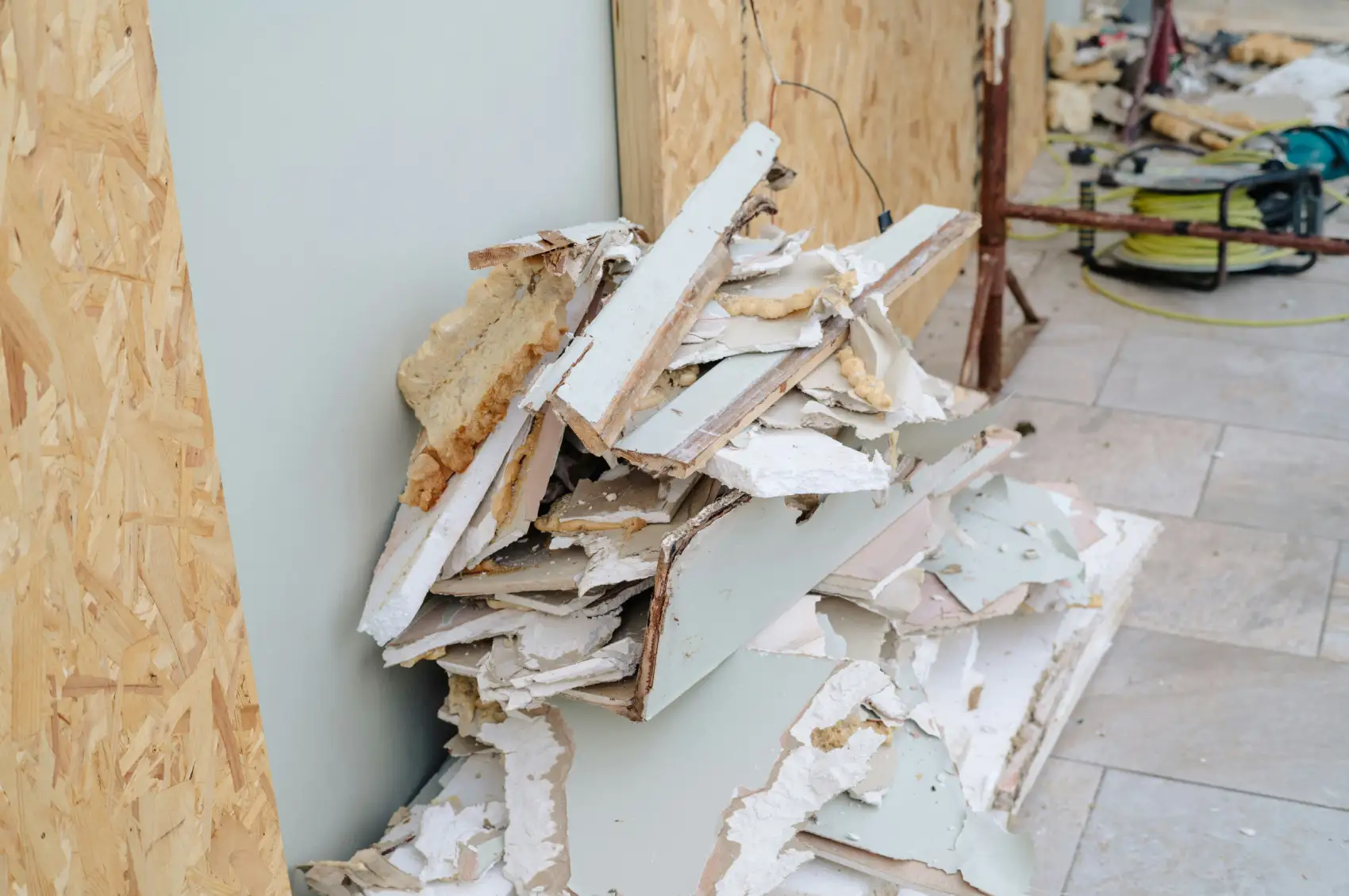
Demolition debris image: Photo by Annie Spratt Unsplash
Mixed renovation debris like drywall, wood, and foam is hard to separate once it's in the container, so more of it ends up in the landfill. Keeping clean materials apart makes them easier to recover.
Loading Tips to Avoid Overage Fees
A few habits help you use the full space without extra charges:
- Load heavy items first and spread them out. Placing dense debris across the floor keeps the weight balanced for transport.
- Break items down. Disassemble furniture and flatten boxes to cut wasted air space.
- Keep the load below the top edge. Most haulers will not pick up a container loaded above its walls because debris can fall off during transport.
- Watch the weight, not just the volume. With concrete, dirt, or shingles, the weight cap is usually the real limit.
- Keep banned items out. Set aside paint, batteries, tires, and appliances for proper disposal.
- Load safely. Wear gloves and sturdy boots, and use the rear door when the hauler provides one.
Frequently Asked Questions
How many pickup truck loads fit in a 20 yd dumpster?
About six pickup truck loads, based on the typical 22 × 7.5 × 4.5 foot container.
How much weight can a 20 yard dumpster hold?
Most have an allowance of 2 to 3 tons, or 4,000 to 6,000 pounds. Going over the limit usually triggers a per-ton overage fee.
What is the difference between a 20 and 30 yard dumpster?
Both are usually 22 feet long and 7.5 feet wide. The 30 yard roll off is about 6 feet high instead of 4.5, which gives it 10 more cubic yards of capacity and a slightly higher weight limit.
Do I need a permit for a 20 yard roll off?
Usually not if the 20 yd roll off dumpster stays on your driveway or other private property. A permit is often required for placement on a public street or sidewalk. Check with your city or county, because rules differ from place to place.
Can you put concrete or dirt in a 20 yard dumpster?
You can, but only in small amounts. Dense debris reaches the 2 to 3 ton limit quickly, so haulers often recommend a dedicated heavy-debris dumpster, which Dumpsters.com offers with a weight limit of up to 10 tons. A 10 yd roll off is a common choice for these loads.
Conclusion
A 20 yd dumpster offers a practical middle ground: about 22 feet long, roughly six pickup loads of capacity, and a weight limit of 2 to 3 tons. It handles most remodels, cleanouts, and small roofing jobs. Before booking, measure the drop site, check if you need a street permit, sort out hazardous items and appliances, and watch the weight of dense debris. These steps prevent most surprise fees and help more of your waste reach a next use instead of the landfill.
Foam packaging is a special case: it is bulky but very light, and it is rarely recovered from mixed loads, so it is worth checking can Styrofoam be recycled in your area before you toss it in the container.