
Table of Contents
Can styrofoam be recycled? Yes, but rarely through a curbside bin. The material can be recycled, but curbside collection of expanded polystyrene remains limited in the United States, so most of the foam that does get recycled goes through drop-off sites and business-to-business channels. This guide explains what styrofoam is, why it is hard to recycle, and where it can go.
Is Styrofoam Recyclable? The Short Answer
In principle, yes. Polystyrene is a thermoplastic and can therefore be melted and then reshaped. Whether or not a particular item is recycled depends on three things: the type of foam, the condition of the foam, and the recycling schemes that are available in your area.
Clean, white packaging foam has the best chance. Food-soiled containers have very little chance, because most drop-off sites accept packing materials but not food or medical containers. A plastic #6 program isn't a guarantee either, since it may still exclude expanded polystyrene (same source).
So when a neighbor asks "Do you recycle styrofoam?" they require two responses — which type of foam and where.
What Happens to Foam That Is Thrown Away
It persists. Polystyrene foam does not biodegrade in any practical terms. Environment America states that it takes hundreds of years to decompose, if decomposition occurs at all. In the ocean, the effects of sunlight, wind, and wave action break it down into microplastics, which marine animals and seabirds then eat after mistaking the fragments for food. The advocacy group Citizens Campaign for the Environment notes that the Ocean Conservancy's 2018 International Coastal Cleanup gathered over 2.3 million pieces of foam.
For its weight it is bulky.Expanded polystyrene consists of about 98 percent air; a patent relating to the treatment of EPS gives its specific gravity as about 0.02, as compared with slightly less than 1 for solid polystyrene resin, meaning that the foam has roughly fifty times the volume of the plastic it contains. That is the reason why foam makes up only about 0.01 percent of the municipal solid waste stream by weight, even though its volume poses the greater problem.
A material which lasts for centuries and which is expensive to move cannot be buried without having consequences. That is the case for recycling, for reuse, and for the restrictions now placed on single-use foam.
Styrofoam and Polystyrene Foam Are Not the Same Material
Styrofoam is a trademarked brand of closed-cell extruded polystyrene (XPS) insulation board, which is used in walls, roofs and foundations and can be identified by its blue color. It was developed by Dow and is now listed as a DuPont trademark. The pink boards available in hardware stores are a competing XPS product made by Owens Corning.
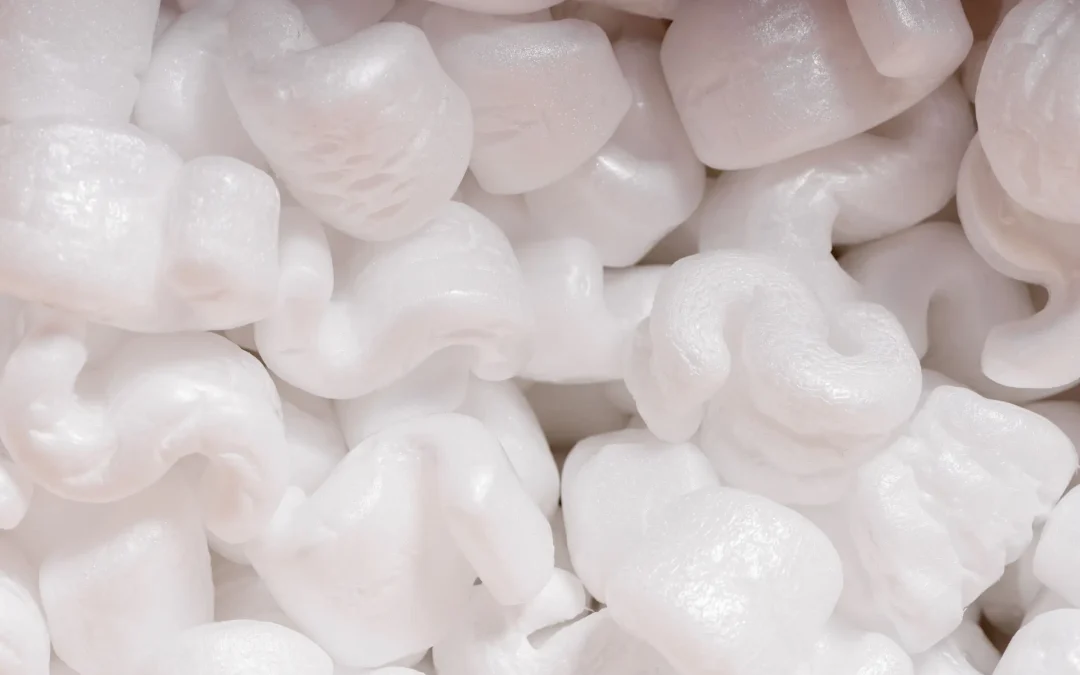
The expanded polystyrene (EPS) found in things such as coffee cups, takeout clamshells, egg cartons, coolers, packing peanuts and molded packaging blocks begins as small beads that contain a hydrocarbon expanding agent, the beads expanding and fusing together into blocks or molded shapes as a result of steam and pressure. This is the reason why EPS has a beaded appearance whereas extruded XPS has closed cells and a smoother surface.
In everyday American English, "styrofoam" has become a genericized term for EPS, and this article uses it that way. The distinction matters: the 700-plus consumer drop-off points counted by the industry are EPS collection sites, while XPS recovery happens mainly inside business-to-business supply chains. As a result, the answer to "can styrofoam be recycled?" is not the same for a foam cooler and a blue insulation board.
Styrofoam Recycling: How the Process Works
Styrofoam recycling starts with reducing its volume. At a recycling plant, the EPS is shredded and then fed into an extruder, where it is melted into a dense substance by the application of both heat and pressure; this process is known as densification. Mobile units can carry out densification on site and reduce the foam's volume by 90 percent, as stated by. Patents also mention dissolving the foam in a solvent such as limonene in order to shrink it before the polystyrene is recovered.
Densified polystyrene is sent back to the manufacturers to be used as raw material in the production of new EPS products. According to BuildBlock, an EPS manufacturer, after a number of cycles the material is then marketed to other companies that make items such as trash bags. The Polystyrene Recycling Alliance states that over half of the 119 EPS and XPS facilities it has identified are manufacturing end markets that use recycled feedstock.
Why Recycling Styrofoam Stays Limited
The process is kept out of the curbside bin by four constraints.
- Transport economics. Loose foam contains a small amount of plastic per truckload. One patent states that a truck which can carry a ton of waste is only able to transport around 20 kilograms of EPS ([U.S. Patent 5,859,072].
- Contamination. Contaminants can spoil the recycling process, and most drop-off sites do not accept food and medical containers.
- Low material value. Earth911 states that processed EPS resin is sold for around $300 to $500 per ton, which is a meager return given how costly it is to transport.
- The amount of effort involved. In order to take part in drop-off programs, people have to know where to go, make a special journey, and bring clean foam, and most of the foam is lost at home before it gets to a recycler.
Where You Can Recycle Styrofoam
"Can you recycle styrofoam?" is a local question, and the reply is yes in any area where a nearby facility takes your kind of foam. A study carried out in 2026 for the Polystyrene Recycling Alliance (PSRA), an initiative of the PLASTICS Industry Association, found that 81 companies were processing recovered EPS or XPS at 119 sites in 30 U.S. states and four Canadian provinces, with more than 700 EPS drop-off locations available. The study also suggests that about 105 million Americans, which is approximately one in three, have access to a service that deals with at least one type of polystyrene. Earth911 notes that these figures are mainly derived from industry groups and that independent verification is scarce.
If you plan to recycle styrofoam, the type of foam decides the route.
Clean packaging foam. White blocks and molded corners from electronics, appliances, and furniture are the simplest case, as most drop-off centers will take packing materials.
Packing peanuts. The EPS Industry Alliance directory includes, alongside recycling sites, loose-fill reuse drop-off locations [RE:Source], which means that reuse is generally the way to go for packing peanuts.
Food containers and cups. The issue here is that most of the drop-off locations will not take them. TerraCycle provides a prepaid mail-in Zero Waste Box which is designed for EPS food packaging; make sure that it is still available before you order it.
Is Styrofoam Recyclable or Trash?
When the question "can styrofoam be recycled?" is applied to ordinary objects, it generally has one of the answers listed below. Local regulations always take precedence.
| Item | Recyclable? | Best option |
|---|---|---|
| Clean white packaging blocks | Usually, at EPS drop-off sites | Drop-off |
| Packing peanuts | Usually reused rather than recycled | Loose-fill reuse drop-off |
| Clean foam coolers | Depends on the site | Check the site, otherwise reuse |
| Food-soiled trays and clamshells | Generally not accepted | Trash |
| Foam cups and plates | Generally not accepted at drop-off sites | Mail-in box if available, otherwise trash |
| Blue XPS insulation board | Through commercial channels | Specialist recycler |
When the answer to the question "is styrofoam recyclable or trash?" turns out to be trash, it shows that the limitation lies with the collection network, not with you.
How to Prepare Foam Before Drop-Off
Because the conditions prescribed by the recyclers are strict, it is the preparation that determines whether or not your foam will be accepted.
- Remove the tape, the plastic film, the labels, the loose parts, and the cardboard that has been glued on.
- Make sure that the coolers and cartons are completely empty, since waste consisting of food and medical material is not allowed.
- Take only the types of material that the site accepts; for instance, EFP accepts clean, white EPS that has the recycling symbol on it but will not take foam that contains food or other residue.
- It's advisable to check the hours and call in advance since the drop-off windows may be narrow: EFP will accept foam from 9 a.m. to 2 p.m. on weekdays and asks people to book in advance.
How to Dispose of Styrofoam
Drop-Off Before Trash
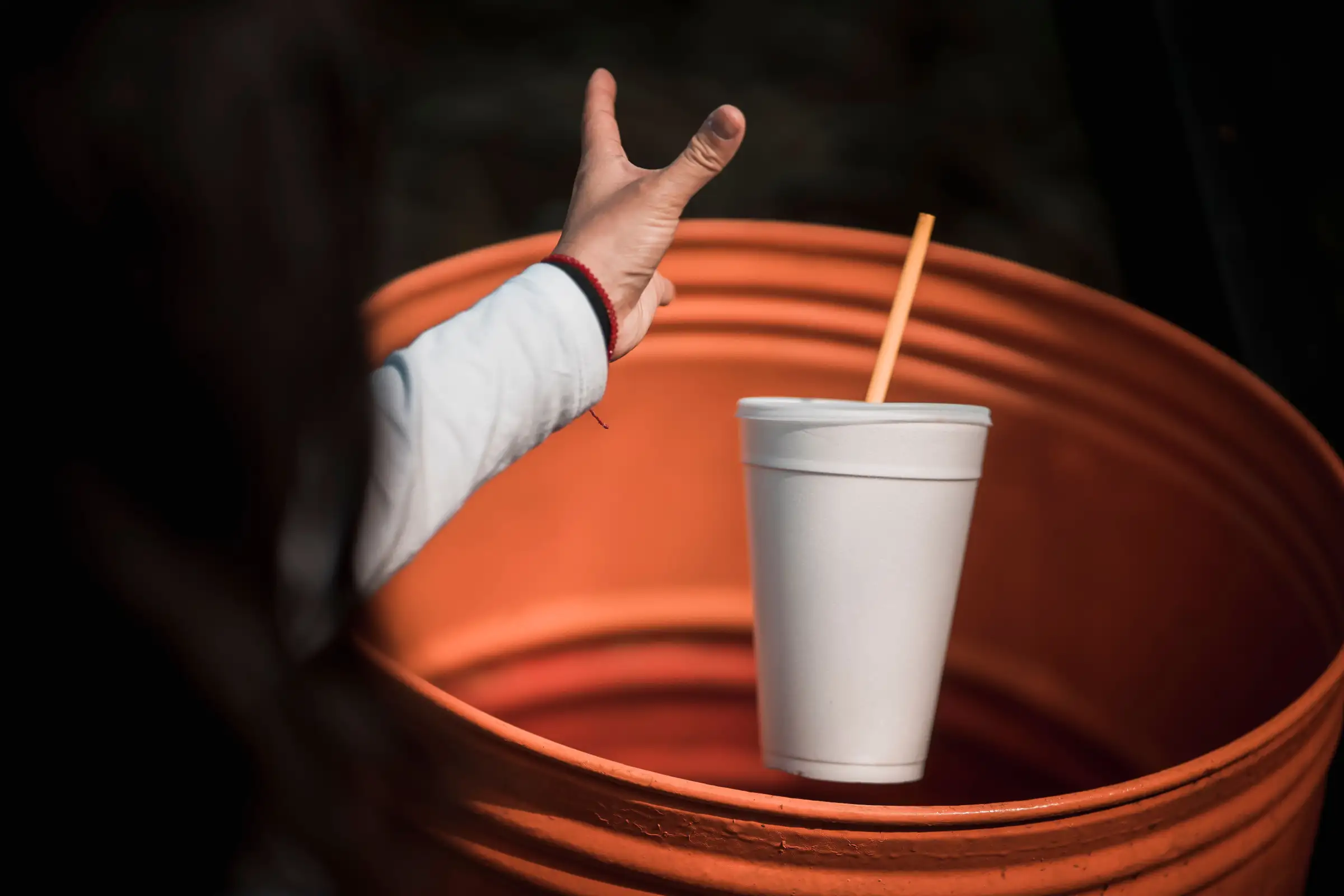
Most curbside programs won't take foam cups and containers, so check for a local drop-off point before tossing them in the trash. Foam food packaging shouldn't be reused for food once it has held something else.
The highest priority is to reuse, then to take it for drop-off, and finally to send it to the trash.
To find where to dispose of styrofoam, use the or search for recycling options by entering your ZIP code on Earth911's website. The EPS Industry Alliance will also respond to inquiries regarding local recycling facilities at 800-828-2214. However, it should be noted that although the #6 resin code refers to polystyrene, it does not mean that your local recycling program will accept it.
When no site is within reach, "can styrofoam be recycled?" is no longer the practical question; how to get rid of styrofoam responsibly is. Reuse clean pieces as packing material, offer them to people or businesses who ship goods, or use a mail-in program. As a last resort, bag the foam and put it in the trash so it cannot blow away.
Don't burn it, since certain kinds of EPS include brominated flame-retardant additives which can lead to the formation of highly toxic polybrominated dioxins when the material is incinerated. You should not put it into your curbside recycling bin unless your recycling program specifically accepts foam.
Foam Bans and What They Change
Since foam is difficult to recycle, a number of governments have set limits on it at the source. By the end of 2023, 11 states had introduced bans or restrictions on polystyrene foam products, and since then the number has increased. Maine was the first to approve a ban, which came into force in 2021, and Maryland did so as well (same source). New Jersey, Oregon and Rhode Island have also banned foam food containers, as has Delaware.
New York has prohibited the use of foam food containers and loose-fill packing peanuts, and as of January 1, 2026, EPS cold storage containers such as coolers which are not enclosed in a more durable shell are banned as well. Virginia's ban initially applied to chains with 20 or more locations and has since been extended to include all food vendors as of July 1, 2026 ([Earth911](https://earth911.com/business-policy/the-state-of-plastic-bans-in-the-united-states/)).
The laws apply to foodservice containers and, in the case of New York, also cover loose fill and coolers. Since molded protective packaging is not included in the list, recycling and reuse are still required. As the rules are frequently revised, it is important to check with your state and city before deciding what can be disposed of.
Frequently Asked Questions
Is Styrofoam Biodegradable?
No. It may take hundreds of years to decompose, if it decomposes at all, and in the meantime it breaks apart into microplastics.
Can I Put Styrofoam in My Recycling Bin?
Most of the time, no. Even those programs which do collect plastic number 6 may not take expanded polystyrene, so it's best to check the local rules first.
Is Styrofoam Recyclable at Home?
Not in the sense of dealing with it yourself. Since densification needs industrial heat and pressure, the only thing you can do at home is to store clean foam and then take it to a drop-off point. Reusing it as packing material is the one option that is genuinely within reach.
Can You Recycle Styrofoam Cups?
It is rare, because most drop-off locations will not take food containers, and cups which have held drinks are considered to be food packaging. The main alternative, where one is offered, is a mail-in box for EPS food packaging.
Can Styrofoam Be Recycled by Mail?
Yes, there are situations in which TerraCycle provides a prepaid Zero Waste Box for EPS food packaging. Since posting a bulky but lightweight material involves a cost, this option is most appropriate when there is no drop-off point nearby.
Is the Blue Foam Board Recyclable?
It is XPS insulation. It is recovered mainly through commercial channels, since consumer drop-off networks are built around EPS, so contact a specialist recycler. Clean offcuts can also be reused on other projects.
Conclusion
So, can styrofoam be recycled? Yes, with conditions: clean foam, a site that accepts your type, and a trip beyond the curbside bin. Because the material persists for centuries and is costly to move, that effort is worth making, and reuse is better still. Check a drop-off map before your next trip, and explore our other guides in the Recycling category to learn what else can and cannot go in your bin.
[INTERNAL LINK: Recycling category page]
[INTERNAL LINK: Environment, Water & Regulations category page]
[INTERNAL LINK: future articles on glass and cardboard recycling]