
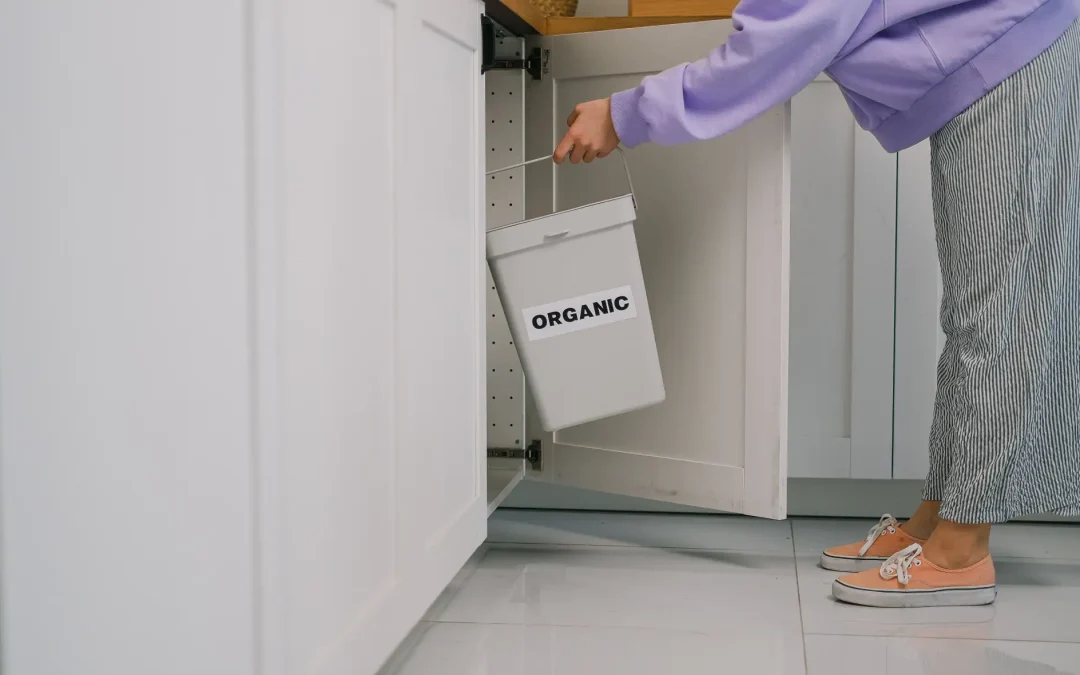
Photo by SHVETS production on Pexels
Table of Contents
The word “compostable” on a box tells you little about where the bag inside will break down or whether your city will accept it. Compostable garbage bags break down under specific conditions found in commercial composting facilities, not in landfills or reliably in backyard piles. Some city programs require organics to be bagged and accept only paper or certified compostable bags. At least one large program refuses compostable bags outright.
This guide explains what the label must mean to matter, which certification marks to look for, where these bags break down and where they do not, and how four large city programs treat them.
What "Compostable" Actually Means
In the United States, the reference point for compostable bags is ASTM D6400, a standard specification covering plastics designed to be composted in municipal and industrial aerobic composting facilities, where thermophilic conditions are reached. It sets the properties a product must meet to compost satisfactorily, including biodegrading at a rate comparable to known compostable materials. ASTM D6868 covers the related case of plastics and polymers incorporated into paper and other substrates by lamination, extrusion, or mixing, and requires the finished item to disintegrate during composting, biodegrade adequately, and leave compost that still supports plant growth.
Two points follow. First, the standard describes a managed facility, not a backyard compost bin. Second, the word alone is a marketing claim unless backed by testing. A compostable bag never tested is just a bag with a word printed on it.
That is the basis on which compostable garbage bags are sold and explains why the same bag can be the right choice in one city and a problem in the next. The bag has not changed. What changes is whether anything downstream can finish the job the standard describes.
Compostable vs. Biodegradable
These terms are not interchangeable, and the difference matters when you shop. “Compostable” refers to a defined test with a clear endpoint. “Biodegradable” promises nothing about how long or under what conditions.
The Federal Trade Commission sees this gap as a deception issue. Under its Green Guides, a marketer may make an unqualified degradable claim only with proof the product “will completely break down and return to nature within a reasonably short period after customary disposal,” which the agency interprets as one year. The Guides also state that items destined for landfills, incinerators, or recycling facilities will not degrade within a year. So biodegradable waste bags sent to landfills do not meet the agency’s standard for the word.
Several states have gone further. Washington bans the words “biodegradable,” “degradable,” and “decomposable” on plastic products and permits only “compostable.” California and Washington had barred those terms before Maryland became the third state to do so in 2017. California’s AB 1201 went further in 2021 by requiring third-party certification for anything labeled compostable. Under the same law, from January 1, 2026, such products must also be allowable inputs under federal and state organic programs.
Certification Marks on the Box
The mark city organics programs most often name for compostable garbage bags comes from the Biodegradable Products Institute, a member-based nonprofit. Products it certifies meet the applicable ASTM standards, limits for total fluorine (used to measure PFAS), and must display the BPI Certification Mark. This last requirement makes the mark useful at the store: you look for the logo, not the adjective.
Bags carrying it are sold as BPI compostable bags, and that is the phrase worth searching for when you compare products online.
Certification also carries legal weight. California’s AB 1201 requires products labeled compostable to be certified by a third party. Several city programs now name BPI certification directly in their rules, as covered below. Certification does not guarantee a facility will accept the bag or that one exists near you. It verifies the material against a test; the rest depends on local conditions.
Washington took a different approach by regulating the bag’s appearance. Since January 1, 2024, compostable film bags sold there must be tinted green, beige, or brown with the word “compostable” in one-inch text, or carry that word on both sides in those colors, or display a colored band with the word inside it. Non-compostable film bags may not use those tints, except for thin stripes as visual aids and brand lettering or logos. This helps sorters and residents tell the bags apart at a glance.
One caution on compostable plastic bags marked “home compostable.” That is a separate claim from ASTM D6400, which describes industrial conditions. Treat the two as different promises.
Where These Bags Break Down, and Where They Don't
Commercial facilities work the way they do because heat does the work. According to the EPA, the beneficial microorganisms in a compost pile need 131 to 160 degrees Fahrenheit for optimal activity, and a pile has to stay at 131 degrees or above for several days to meet pathogen reduction standards. Windrow composting, long narrow rows roughly twice as wide as they are high, is the most common method in the country. Aerated static piles and in-vessel systems control conditions more tightly.
In a Home Compost Pile
A backyard pile runs cooler. The EPA notes that passive aeration in home systems usually does not get the pile hot enough to break down meat, bones, and dairy. A bag certified for a facility that holds 131 degrees for days is not expected to do the same job in a pile that never reaches that temperature. That is why compostable waste bags should not be counted on to disappear in a backyard pile.
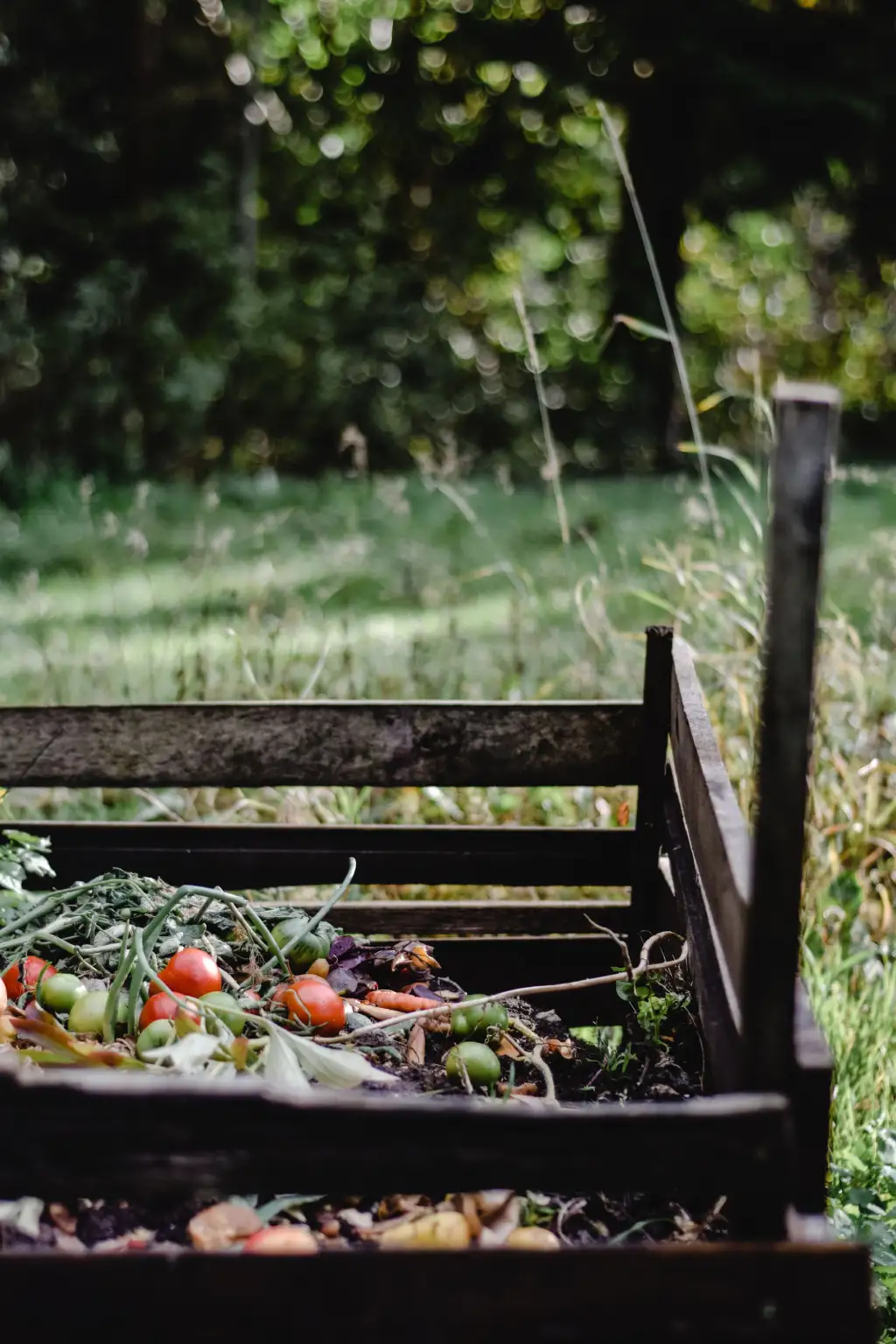
Photo by Eva Bronzini on Pexels
Why a Backyard Pile Runs Cooler
The EPA puts the optimal range for the microorganisms in a compost pile at 131 to 160 degrees Fahrenheit. Passive aeration in home systems usually does not get the pile hot enough to break down meat, bones, and dairy.
In a Landfill
A landfill is not a slow compost pile. The Green Guides clearly state that items sent to landfills will not degrade within a year. A certified bag buried in a landfill offers no benefit over a conventional bag. The certification describes what happens at a composting facility, and if the bag never reaches one, the certification does not apply.
This gap trips up most buyers. Compostable garbage bags are not a disposal method on their own; they are inputs to a system that must exist for them to work. Where that system is missing, the useful comparison is not between a certified bag and a conventional one, but between bagging the material at all and keeping it out of the waste stream by other means.
Do Curbside Organics Programs Accept Them?
A national answer breaks down here because the four programs reviewed do four different things.
Minneapolis requires organics to be bagged, and accepts brown paper bags or certified compostable plastic bags carrying the BPI logo on both the box and the bags themselves. The city tells residents to check BPI’s website when buying online.
Portland accepts paper bags or a BPI-certified compostable bag at home, and BPI-certified compostable bags only for businesses. The city is strict about where the line sits: no containers, packaging, or other items labeled “compostable,” “biodegradable,” or “made from plants,” with BPI-certified bags the single exception.
New York City lets residents line the bin with a clear plastic, paper, or compostable bag, and allows extra leaf and yard waste in a paper lawn and leaf bag or a clear plastic bag.
San Francisco’s program takes the opposite line. The hauler that runs it does not accept compostable bags, or other bioplastics, in the green bin. The stated reasons are that the bags do not break down within the designated timeframe at its composting facilities and may leave behind microplastics that contaminate the compost. Residents are told to use a paper grocery bag, newspaper, or pizza box instead, or to put material in loose.
The practical lesson for anyone buying compostable bags for food waste is that the local program’s page settles it, and the answer can be opposite to a neighboring city’s. Buying compostable food waste bags for a program that refuses them means buying a bag that gets removed as contamination.
Using Them as a Kitchen Bin Liner
The property that makes these bags work in a facility also shapes how they behave on your counter. Handling guidance varies by product, so follow the storage and use instructions on the box, including how long a filled bag should sit. Compostable bags for compost bins come in small countertop sizes, and a liner that size is emptied often by definition.
Two practical points: line the pail only when ready to use it. If liquid is a problem, a layer of newspaper at the bottom gives the scraps something to sit on.
Compostable garbage bags are sold by stated capacity like any other bag, so check the figure on the box against your pail before buying a case. A countertop compost bag will not fit a thirteen-gallon kitchen can; compost trash bags for that size are a separate product. [INTERNAL LINK: Garbage Can Sizes]
Yard Waste: Paper Bags or Compostable Bags?
Yard waste often follows a different rule than food scraps, even inside the same city. New York City accepts a paper lawn and leaf bag or a clear plastic bag for extra leaf and yard waste. Minneapolis collects yard waste separately from organics, so that the compost facility can mix the two at the ratio it needs. For yard waste the city accepts reusable containers, kraft paper bags, compostable bags carrying the BPI logo, or bundles tied with twine, and it states that using a traditional plastic bag for yard waste collected at the home is illegal.
Before buying biodegradable lawn bags, check two things on the city’s page: whether the yard waste stream has its own bag rule and whether the box says “compostable” or “biodegradable.” Since several states now ban the second word on plastic products, a bag still marketed that way deserves a second look.
Note how different the two Minneapolis rules are. Food scraps must be bagged in paper or a certified compostable bag, while the yard waste stream also allows a reusable container or a bundle tied with twine, which needs no bag. For yard waste, the city states that a traditional plastic bag is illegal.
Reading the Marketing Claims
Once you know what the standards require, the shelf gets easier to read. Phrases like “eco friendly trash bags,” “plant-based,” or “earth-friendly” are not defined terms. For the one word that is defined, the FTC’s Green Guides say marketers should qualify a claim that a product can be composted in a municipal or institutional facility when those facilities are not available to a substantial majority of consumers.
Color deserves a note because it works in two ways. In Washington, green, beige, or brown tint is a regulated signal reserved for certified compostable film and forbidden on other bags. Elsewhere, that tint carries no such meaning: green garbage bags in states without that rule say nothing about what the bag is made of or where it can go. Outside Washington, no rule reviewed here assigns meaning to a bag’s color.
What to look for instead: the specific word “compostable,” a certification mark from a third party, and the ASTM standard number. Those three are checkable. The adjectives are not.
Local acceptance is the other thing worth reading honestly. Certified compostable garbage bags do something real where a program accepts them, and where no program does they buy nothing that a paper bag or loose material would not. That is why the program’s page is the first thing to check and the box is the second.
Frequently Asked Questions
Do compostable bags work in a backyard pile?
Often not. ASTM D6400 describes conditions in a managed facility, and the EPA notes that passively aerated home piles usually do not get hot enough to break down materials such as meat, bones, and dairy. A bag sold specifically as home compostable is making a different claim, which is worth confirming before you count on it.
What is the difference between a compostable bag and a biodegradable bag?
A compostable bag points to a defined standard with a defined endpoint and, when certified, to third-party testing. “Biodegradable” sets no timeframe and no conditions, which is why the FTC limits unqualified degradable claims and why several states now ban the word on plastic products. In practice, a box that leans on the second word and shows no certification mark is telling you what it could not prove.
Can you put compostable bags in the recycling?
No. None of the programs reviewed here lists compostable bags as a recycling material, and the San Francisco hauler tells residents to put them in the garbage instead. Compostable trash bags belong in an organics program that accepts them, or in the trash.
Are compostable bags better than plastic if my city has no organics program?
If the bag goes to a landfill, the certification does not deliver what it promises, since these bags are designed for facility conditions landfills do not provide. The more useful question is whether a drop-off site, community garden, or subscription collection service operates near you.
The Bottom Line
Check the city’s page first, then the box. Look for the word “compostable,” a third-party certification mark, and the ASTM standard. Treat “biodegradable” and “eco-friendly” as unverified until proven. If your city’s organics program accepts certified bags, they are a practical way to keep a pail clean. If not, or if there is no program, compostable garbage bags end up in a landfill where the tested standard never applies.(you can see: compost starter)