
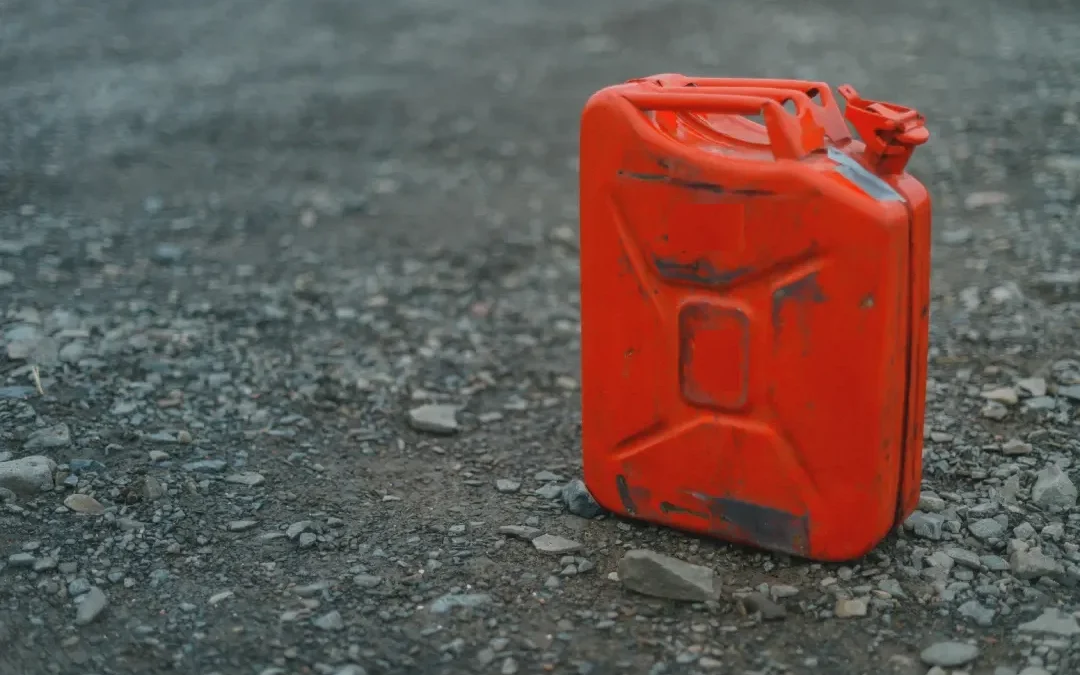
- Featured image: Photo by Egor Myznik on Unsplash (edited)
Table of Contents
How to Dispose of Old Gasoline Safely and Legally
Most homes have a forgotten gas can somewhere: fuel left over from last summer's mowing, a can bought for a generator that never ran, or a tank in a car, boat, or motorcycle unused for months. Sooner or later, the question arises of how to dispose of old gasoline without creating a fire hazard or polluting the ground.
Gasoline cannot go in the trash, down a drain, or on the soil. The good news is that learning how to get rid of old gasoline the right way is usually simple, and many collection programs are free for residents. This guide explains why old fuel needs special care, how to tell if it has gone bad, where to take it, how to move it safely, and how to store gas so you have less to throw away next time.
Why Old Gasoline Needs Special Handling
Gasoline is one of the most flammable liquids found in a typical home. Its vapors are three to four times heavier than air and tend to collect in low or enclosed spaces like a garage floor or basement. A pilot light, cigarette, or spark from a tool can ignite those vapors even when the liquid is some distance away.
For that reason, state and local agencies treat leftover gasoline as household hazardous waste. Georgia's Environmental Protection Division, for example, lists gasoline among problem household products such as paint, solvents, and spray insecticides, and notes that liquids are not allowed in the trash. New York City's sanitation department puts it plainly: gasoline "should NEVER be disposed of in the trash or recycling."
Health and Environmental Risks
Gasoline is not a single chemical. It is a refined mixture of more than 150 compounds, including benzene, toluene, and xylene. Breathing high levels of its vapors for short periods can irritate the airways and affect the nervous system, with effects that range from dizziness and headaches to, in severe cases, coma and respiratory failure.
Spilled or dumped fuel does not simply disappear. Part of it evaporates into the air, and some of its chemicals can dissolve into groundwater. Gasoline poured into a street drain is even more direct, since in most areas storm drains carry runoff to local streams and lakes without treatment. That is why agencies such as New York City's sanitation department warn against pouring gasoline down drains, into sewers, or into waterways.
How to Tell If Gas Has Gone Bad
Before deciding how to dispose of old gas, check if it has actually gone bad. Gasoline breaks down over time as its most volatile parts evaporate and the rest oxidizes. Storage conditions matter more than most expect. A study by the National Renewable Energy Laboratory (NREL), a U.S. Department of Energy lab, found that gasoline can weather significantly within one month in hot, humid storage, and that ethanol-free gasoline degraded the same way as ethanol blends.
Most fuel sold in the United States is E10, a blend of 90 percent gasoline and 10 percent ethanol. Ethanol absorbs water from the air. In the NREL study, it took three months or longer for E10 to absorb enough water for the water and ethanol to separate from the gasoline. As a practical rule, use untreated fuel within a few months. A fuel stabilizer can extend shelf life to one to three years, depending on the product, but works best when added to fresh gas.
To check stored fuel, pour a small amount into a clear glass jar and compare it with fresh gasoline. Warning signs include:
- Color change. Fuel that has turned dark, cloudy, or the color of rust or milk chocolate.
- Layers. Two distinct layers, which usually means a water and ethanol mixture has settled at the bottom.
- Sediment. Rust, dirt, or gummy deposits.
- Smell. A sour odor instead of the sharp smell of fresh gas.
In equipment, bad fuel often causes hard starting, rough idling, sputtering, or stalling. If your fuel fails these checks, the next question is how to dispose of bad gas, and the answer depends on what is wrong with it.
Types of Bad Gas
Not all bad gas is the same, and knowing how to dispose of old gasoline starts with identifying which kind you have.
Old but clean gas. Fuel that is simply stale, with no water or debris, can sometimes be used up in a car (see the next section).
Water-contaminated gas. Gas with a visible water layer or a cloudy look should not go into any engine. It needs to go to a hazardous waste site.
Gas with sediment or rust. Dirt and rust can clog filters and injectors, so this fuel should also be taken for disposal.
Mixed fuel. Gas blended with two-stroke oil for chainsaws, string trimmers, or outboard motors cannot be used in a car. Label the can clearly and take it to a collection site with your other fuels.
Wrong fuel. Gasoline accidentally mixed with diesel, or the reverse, should not be burned in either type of engine. Treat it as waste.
In every case except clean, stale fuel, how to dispose of bad gasoline is the same: take it to a collection site or a licensed hazardous waste company.
Can Old Gas Still Be Used?
Sometimes, yes. If the fuel looks clean and has no water or sediment, a small amount can be blended into a car's tank of fresh gas. Home improvement writer Bob Vila suggests adding about half a gallon of old gas to a 9- or 10-gallon tank that is at least three-quarters full, or up to one gallon in a 16-gallon tank.
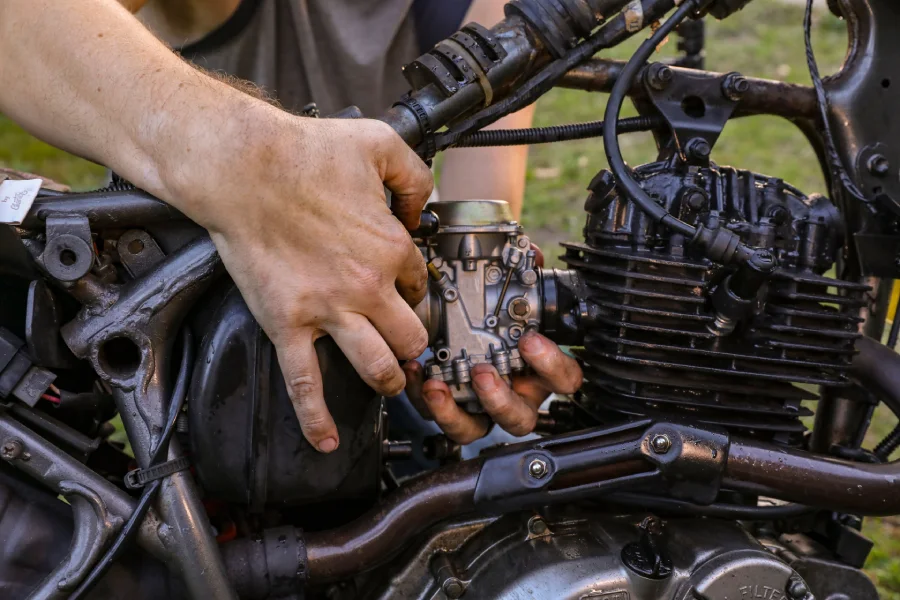
Stale Gas Clogs Small Engines
Carbureted engines in mowers, motorcycles, and generators are easily gummed up by old fuel. Drain stale gas before storage and take it to a collection site instead of reusing it.(Photo by Mick Haupt on Pexels (edited))
This approach is only for cars and trucks. Do not use it in lawn mowers or other small engines, which are more sensitive to stale fuel and can be clogged by its deposits. And if the fuel shows any of the warning signs listed above, skip the blending idea and take it to a collection site instead.
How to Drain Gas From Equipment and Vehicles
Before storing a mower, generator, or snowblower for the season, many owners drain the tank or run the engine until empty. When removing fuel from a tank, work outdoors away from flames, pilot lights, and sparks, and let the engine cool completely first. Use a hand-operated siphon pump or a drain valve if the equipment has one, and collect the fuel in an approved gas can so you can dispose of old gas properly later. Wipe up drips immediately and let rags dry outdoors before discarding. If you are unsure how to dispose of gas drained from a small engine, treat it like any other old fuel and take it to a collection site.
Never siphon gasoline with your mouth. The national Poison Control center warns that siphoning can draw gasoline into the lungs, which "can cause pneumonia, coma, and death." If someone swallows or inhales gasoline, call Poison Control at 1-800-222-1222.
Draining a car's fuel tank is harder, since many modern vehicles have anti-siphon devices. For a full tank of bad fuel, a repair shop is usually the safest choice.
Where to Dispose of Old Gasoline
When people search for where to dispose of gasoline, the answer is almost always a household hazardous waste (HHW) program. Most counties and many cities run a permanent drop-off facility, scheduled collection events, or both. These programs typically accept gasoline, diesel, kerosene, and other fuels from residents. King County, Washington, for example, accepts "gasoline, diesel fuel, kerosene, propane, and other fuels" at its collection sites.
If you are asking, "Where can you dispose of old gas when there is no permanent facility nearby?" watch for scheduled collection events, which many areas hold once or several times a year. Counties usually post event dates online, along with instructions on how to dispose of old gasoline and other fuels on the day.
To find where to dispose of old gas near you:
- Check your city or county website. Search for "household hazardous waste" plus your county name.
- Use a recycling locator. The EPA recommends searching the Earth911 database by ZIP code.
- Call your local fire department. Some can point you to the nearest site.
- Ask a repair shop. Some auto shops may accept small amounts, so call first.
Drop-off is free for residents in many programs, but each one sets its own rules. King County, for example, requires containers of 5 gallons or less and caps drop-offs at 25 gallons per trip. In Los Angeles County, residents cannot transport more than 15 gallons or 125 pounds of household hazardous waste per trip.
Ask about your gas can before you go, too. Some sites will empty and return it, while others keep it. Los Angeles County, for instance, does not return containers. If you get an empty can back or have one left over, King County advises venting it for two or three days with the lid open, after which it can go in the garbage. Rules differ elsewhere, so check locally. A can in good condition is also worth keeping for future use, as long as it is an approved fuel container.
People also ask how to recycle old gasoline. Strictly speaking, collected fuel is not turned back into gasoline. Santa Clara County, California, for example, manages collected gasoline, diesel, and kerosene through fuel blending, a process in which the waste is "burned as a fuel to generate energy." The fuel still serves a purpose, which is better than letting it seep into the ground.
How to Transport Gasoline Safely
The trip to a collection site is short, but moving fuel still requires care. Many people focus on finding a drop-off site and give less thought to how to dispose of gasoline safely along the way:
- Use an approved container. King County asks for an approved safety can labeled "gasoline." Never carry fuel in milk jugs, water bottles, or food containers.
- Keep it upright and contained. Set the can in a plastic bin or cooler to catch any leaks.
- Ventilate. Place the can in the trunk or truck bed rather than the passenger area, and keep air moving.
- No smoking. Do not smoke in the vehicle, and drive straight to the site.
What Never to Do With Old Gas
Knowing what not to do matters as much as knowing how to dispose of old gasoline. Dumping old gasoline is dangerous and, in many places, illegal. Avoid these common mistakes:
- Don't pour it on the ground or use it to kill weeds.
- Don't pour it down a sink, toilet, or storm drain.
- Don't put liquid gas in the trash. Many cities, including New York, prohibit it, and Georgia EPD notes that liquids are not allowed in the trash.
- Don't burn it or use it to start a fire. Never start or accelerate a fire with gasoline.
- Don't use it as a cleaner or solvent. Gasoline has only one job: fueling engines.
- Don't mix it with other chemicals. Incompatible products can react, ignite, or explode.
- Don't put gas-soaked clothing in the dryer. Lingering fumes can ignite in the heat.
If you wonder where to dump old gas to save a trip, the answer is nowhere outside an approved program. When it comes to how to get rid of old gas, there are three safe options: reuse clean fuel in a car, take it to a collection site, or hire a licensed hazardous waste company.
Laws and Regulations
Federal rules treat households differently from businesses. Under the Resource Conservation and Recovery Act (RCRA), wastes from normal household activities are excluded from the federal definition of hazardous waste, according to the EPA. That exclusion is not permission to dump fuel and does not override local rules. States, counties, and cities set their own rules on trash, sewers, and illegal dumping, and many specifically ban gasoline in household garbage or drains.
Businesses that generate gasoline waste, such as repair shops or landscaping companies, are generally not covered by the household exclusion and must follow commercial hazardous waste rules. Shop owners wondering how do you dispose of gasoline from a business should contact their state environmental agency instead of using a residential drop-off.
How to Store Gasoline So It Lasts Longer
The easiest way to reduce disposal trips is to buy and store less fuel:
- Buy only what you need. The City of Bellingham recommends keeping the minimum amount required, generally no more than a gallon.
- Use approved, tightly sealed containers. Small cans are easier to handle, and some drop-off programs, like King County's, only accept containers of 5 gallons or less.
- Add stabilizer to fresh gas if it will sit for more than a few weeks.
- Store it outside the living space. Never keep gasoline indoors or near heat or flame. A detached shed is better than an attached garage.
- Label and date each can so you know how old the fuel is.
Handling a Small Gasoline Spill
Small spills happen when filling equipment. If one occurs:
- Turn off engines and remove any ignition sources.
- Ventilate the area by opening doors.
- Cover the spill with an absorbent such as cat litter or a commercial oil-dry product.
- Sweep up the material once it has soaked up the fuel, and place it in a metal or heavy plastic container with a lid, stored outdoors.
- Ask your HHW program what to do with the used absorbent. Some states, such as Georgia, allow small solidified amounts in the trash, while others want it brought in.
For large spills, or any spill that reaches a drain or waterway, call your local fire department.
Other Garage Hazards: Paint and Aerosol Cans
Sorting out how to dispose of old gasoline often reveals other hazardous products in the garage. Two come up most often.
Paint. If your next question is where can I dispose of paint, the answer is usually the same HHW program. Santa Clara County recycles latex paint and manages oil-based paint through fuel blending. Some states also have paint stewardship programs that take leftover paint at retail drop-off points.
Aerosol cans. Knowing how to dispose of aerosol cans depends on whether they are empty. Santa Clara County recycles empty flammable and poison aerosol cans. Cans that still hold product should go to an HHW site. Never puncture or burn them.
[INTERNAL LINK: future article on paint and aerosol can disposal]
Frequently Asked Questions
How long does gasoline last before it goes bad?
It depends on storage. Untreated gas is best used within a few months, and hot, humid conditions can degrade it in about a month. A stabilizer added to fresh fuel can extend its life to one to three years.
Can I pour old gas on the ground or down the drain?
No. Gasoline poured on soil or into drains can contaminate groundwater and local waterways, and it creates a fire risk. Agencies such as New York City's sanitation department specifically warn against pouring it into drains, sewers, or waterways.
Will an auto parts store take old gasoline?
Usually not. Many stores and service stations accept used motor oil, but gasoline generally goes to a household hazardous waste program. Some repair shops may take small amounts, so call first.
What should I do with gas mixed with oil?
Two-stroke fuel mix cannot go in a car. Label the can as mixed fuel and take it to a household hazardous waste site.
Is it illegal to throw away gasoline?
In many places, yes. Federal law excludes household waste from hazardous waste rules, as the [EPA](https://www.epa.gov/hw/household-hazardous-waste-hhw) explains, but many states and cities ban gasoline in the trash and drains. New York City, for example, says it should never go in the trash or recycling.
How do I dispose of old gasoline from a lawn mower?
Drain the tank with a hand pump into an approved gas can, working outdoors with the engine cool, then take the can to a household hazardous waste site. If only a little fuel is left, you can instead run the engine until the tank is empty. Do not reuse old fuel in the mower. Clean fuel can be blended into a car's tank in small amounts, while dark or cloudy fuel goes to an HHW site.
Where can I dispose of old gasoline for free?
Many county and city household hazardous waste programs accept gasoline from residents at no charge, though they may limit container size and the amount per trip. Check your local program's rules before you go.
Can I dispose of diesel or kerosene the same way?
Yes. Collection programs such as King County's accept diesel and kerosene along with gasoline.
Conclusion
Learning how to dispose of old gasoline comes down to a few steps. Check whether the fuel is still usable, and blend clean, stale gas into a car's tank only in small amounts. Take anything contaminated, mixed, or unwanted to a household hazardous waste program in an approved can, and never pour it on the ground, down a drain, or into the trash. Store new fuel in small amounts with a stabilizer, and you will have far less to deal with next season.(see "Dumpster Sizes: How to Compare Containers Before You Rent")