
Table of Contents
Recycle bins are issued by your city, and the container it hands you determines much of what you can recycle at home. It sets how much fits, and the program behind it defines which materials belong inside. Three questions cover most household needs: how to get one, what sizes it comes in, and what goes in it.
Every figure below belongs to the specific program that published it, and the cities quoted here contradict each other on basic materials. Read your own program’s list before you sort anything.
How to Get a Container from Your City
Who supplies the container, and who is allowed to ask for one, varies by program.
Howard County, Maryland, provides residents with one free recycling cart for curbside collection, ordered through the county’s online request form, and links to a page for purchasing additional ones. Trash containers are different: the county does not provide those, and residents buy their own. So the answer to where to get recycling bins for free is the county form, while the trash container is a purchase.
The county attaches the container to the property rather than the person. Containers are assigned to each address and must remain at the home even if the resident moves. The county suggests writing the street name and number on the container.
Minneapolis puts no restriction on who asks. Its page states that anyone, including renters, can request one or more One-Sort recycling carts, by phone or email to the Solid Waste and Recycling office. Extra carts are free there, and so are repairs to a damaged cart.
San Diego is mid-rollout, putting its residents on a different footing again. The city is delivering new gray trash containers and light blue recycling containers and runs a 30-day swap-out period. Once the new gray trash container arrives, the household has 30 calendar days to request a size swap, update its order for recycling or organic waste containers, or order additional containers. The city asks residents to wait one business day after delivery before requesting changes. A household with no green container at all is told to call for one, the only standing request path the page describes.
Those are three different answers to how to get a recycling bin, and a rollout window is not the same as a standing request. Recycle bins also differ in what the household owes: Howard County’s first cart costs nothing and additional ones are a purchase, while Minneapolis charges nothing for extra carts. If you want to request recycling bin service or change what you have, the published process for your address governs.
[INTERNAL LINK: Schedule Waste Disposal article]
What Size the Container Comes In
The size menu is set locally, and the four programs below do not agree on a single number.
Madison, Wisconsin, offers two sizes for both refuse and recycling: 65 gallon, measuring 40.58 inches high with the lid, 26.70 inches wide and 28.11 inches deep, and 95 gallon at 45.13 by 28.50 by 33.73 inches. The 35-gallon cart is no longer available. The city still publishes its dimensions to help residents who have one and to show that a 65-gallon cart does not take up much more space.
Minneapolis offers a large recycling cart at 95 gallons, 26 inches wide by 35 deep by 46 tall, taking up to 200 pounds, and a medium at 64 gallons, 23 by 29 by 43, with a 150-pound limit.
San Diego lists 35, 65, and 95 gallons and states its published dimensions apply to all three container types: 24 inches deep by 19 wide by 38 tall at 35 gallons, 27 by 27 by 43 at 65 gallons, and 33 by 29 by 43 at 95. It describes what each size holds as roughly 2 to 3 trash bags, 3 to 5, and 5 to 7. It also lists maximum container weights of 100, 200, and 300 pounds for the three sizes without specifying which container types those weights cover. The city warns that overweight and overfilled containers could lead to service interruptions.
Howard County shows that not every recycling container is a wheeled cart. Alongside a 35-gallon cart at 39 by 20 by 23 inches and a 65-gallon cart at 41 by 27 by 28 inches, it lists an 18-gallon open-top bin at 13.5 inches high, 27.75 wide, and 17.6 deep. The county’s labeling separates that bin from its wheeled carts, so a recycle bin with wheels is not the only shape a program issues.
Recycle bins come in whatever sizes the local program lists, so the right recycle bin size depends on a menu you do not control. Big bin recycling is not the only option: Minneapolis publishes a medium cart beside its large one, and Howard County offers two cart sizes beside the open bin.
Whether a recycling cart has a published weight limit depends on the program. Minneapolis states one per cart size and San Diego lists maximum container weights; Madison and Howard County publish capacities and dimensions without weight figures.
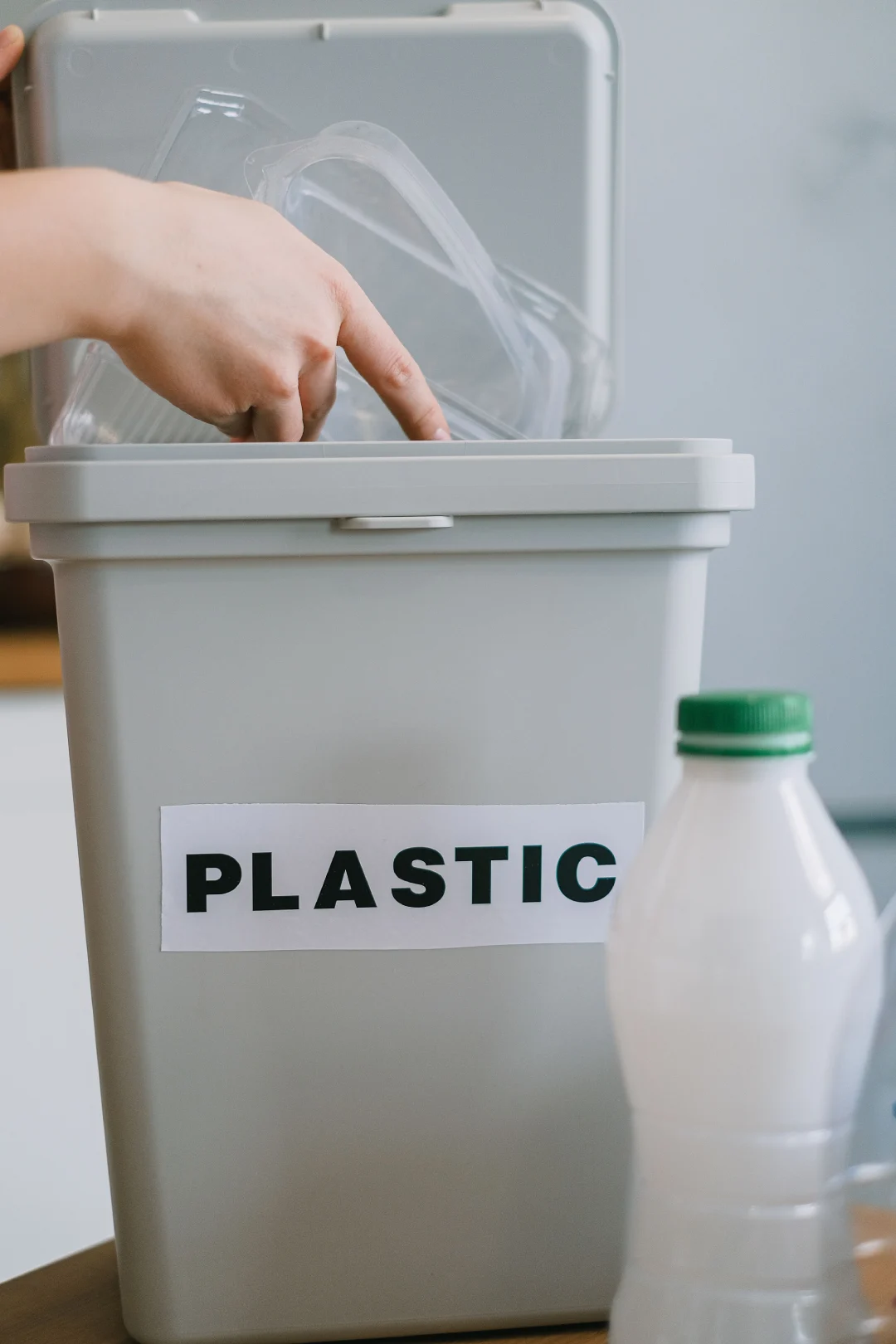
Photo by SHVETS production on Pexels
Three things only your own city can tell you
First, who supplies the container and who is allowed to ask for one. That differs even among the four programs in this guide. Second, the accepted materials list, which is where programs contradict each other most sharply: two of the cities quoted here disagree outright on glass, pizza boxes, shredded paper, and pots and pans. Third, how the material has to be set out, loose or bagged, because that rule carries a penalty in at least one of these programs. Find those three on your municipality's solid waste page before you sort anything.
What the Colors Mean, and Why Programs Disagree
There is one national recommendation, it is voluntary, and it covers a single stream. In January 2017, a working group led by Keep America Beautiful and the United States Composting Council recommended designating green as the voluntary container color standard for organics collection containers. Its survey found that 79 percent of participants identified blue containers as recycling bins, but the recommendation itself issues no color for recycling.
San Diego matches it on the organics side. Gray is trash, light blue is recycling, green is organic waste, and a property that still has the original green yard waste container will have it updated to the standard organic waste container later in 2026. The city’s page also mentions older-model containers, a black trash container among them, advising a resident whose container is damaged but serviceable to wait before repairing or replacing it so that it matches their selected service level, and anyone whose container is not serviceable to submit a repair request now.
Albuquerque lands on the color that survey associated with recycling. Its curbside container is a blue recycle cart, and the city is explicit that glass does not go in it. Glass goes instead to the designated yellow bin at one of the city’s drop-off locations, so a yellow recycling bin exists in that program for one material, away from the curb.
Madison does not follow it. Its recycling carts are green and its trash carts are tan. A green recycle bin there means recyclables, while a green container in San Diego means organic waste.
That is the whole problem in one pair of cities. The same color carries opposite instructions in two states, and a household that sorts by remembered color can put the wrong stream in the wrong cart. Green bin recycling is what Madison publishes and what San Diego does not, so a green recycling bin is only a recycling bin where the program says so.
Recycle bins are color-coded to the streams a particular program runs, and the recommendation above covers only one of those streams. For anything beyond it, federal guidance points one way: contact your local county or municipality to determine your local recycling options. Recycling bin colors have a local answer.
What Actually Goes In
Philadelphia and Albuquerque disagree on four materials outright.
Philadelphia accepts all glass bottles and jars; Albuquerque does not take glass in the cart. Philadelphia accepts clean pizza boxes; Albuquerque lists pizza boxes as not accepted. Philadelphia refuses shredded paper; Albuquerque accepts it and says it should be placed in a clear plastic bag. Albuquerque accepts pots and pans; Philadelphia lists pots and pans among items to keep out.
On plastics the two lists are built differently rather than opposed. Philadelphia lists resin types #1, #2 and #5 and describes the items by shape: food and beverage containers, hard plastic takeout containers, detergent and shampoo bottles, pump and spray bottles, cups and jugs. Albuquerque lists #1 through #7 bottles and tubs, plus rigid plastics such as toys and hampers. Neither list contains the other — Albuquerque covers more resin codes, Philadelphia names shapes that bottles-and-tubs does not.
Four contradictions and one mismatch exist between two American cities. What belongs in recycle bins is a program decision, and reading your own program’s list is the only way to know.
Philadelphia publishes detailed preparation rules: paper out of plastic sleeves, containers emptied, rinsed, and dry with lids and caps on, cardboard flattened and free of grease and food, packing peanuts and foam blocks removed before boxes go in. Albuquerque’s rules differ — tin cans with paper labels removed, shredded paper in a clear plastic bag, a step Philadelphia never reaches since it keeps shredded paper out of the bin.
A paper recycling bin load depends on which city is reading it. Can recycling can go either way too: Philadelphia takes aluminum, steel, and tin cans plus empty paint and aerosol cans; Albuquerque takes aluminum and tin cans, foil, and pie pans.
These lists cover materials rather than the containers themselves, so whether a program will recycle garbage containers once they crack is a separate question for your own city.
Federal guidance is short. Do not put items in your recycling bin unless you know they are accepted. Non-recyclable items can contaminate a whole load of recyclables, causing all to be thrown out.
Bags, Liners, and Loose Recycling
Philadelphia publishes two separate rules here, and they are worth keeping apart.
The first is about the container: recyclables must be put out in a bin, not in a bag or cardboard box. The page gives no reason. The second is about plastic bags as a material: they are not recyclable curbside, and the city explains they tear and wrap around moving parts in recycling machines, causing higher maintenance costs, equipment damage, and worker-safety issues.
Federal guidance says that generally, plastic bags and wraps, electronics, and textiles cannot go in a curbside recycling bin. It adds you should check with your local recycling provider first to be certain, since it depends on your area. It also notes many grocery and department stores accept plastic bags and wrap.
So a plastic bag for recycle bin use is refused in Philadelphia on both counts, and federal guidance treats that as the general case while advising verification locally.
Recycle bins elsewhere come with their own exceptions, and they are specific.
Minneapolis asks residents to place recycling loose in the blue recycling cart and to empty into it any plastic or paper bags they collect recycling in at home, which helps with sorting. Paper bags may go in the cart; plastic bags should go in the garbage or to a drop-off location. Extra recycling may be set beside the cart in paper bags or cardboard boxes weighing less than 40 pounds each but not in personal containers. The city warns that a personal container set out with recycling may be taken and not returned or reimbursed. Whether cardboard recycling containers are acceptable at the curb is a local question: a cardboard box is refused as a set-out container in Philadelphia and allowed beside the cart in Minneapolis.
Albuquerque says shredded paper should be placed in a clear plastic bag. Georgetown, Texas, runs a film plastic program through its hauler where film plastics must be in the hauler’s yellow bag rather than loose in the cart and asks residents to make sure the bag is tied tightly before adding it.
[INTERNAL LINK: Compostable Garbage Bags article]
Indoor Containers and the Curbside Cart
The container under the sink and the cart at the curb are not the same object. Everything above — the sizes, colors, weight figures, and material lists — applies to the container the city collects from.
Indoor recycling receptacles are a step before that, and the programs address this. Philadelphia’s preparation rules are executed indoors, and Minneapolis asks residents who collect recycling in bags at home to empty those bags into the cart. None of these pages specify which container to keep inside, so indoor trash recycle bins sold as two-compartment units are one way to stage the streams; a pair of separate containers is another.
Howard County shows the line between the two is not fixed: its 18-gallon open-top bin is issued as a curbside container and at 13.5 inches high and 17.6 deep is lower and shallower than either wheeled cart the county offers.
Frequently Asked Questions
Where do I find my recycling bin information?
Your municipality’s solid waste page. The federal guidance says the same: contact your local county or municipality to determine your local recycling options.
How can I get a recycling bin if I rent?
It depends on the program. Minneapolis states anyone, including renters, can request one or more One-Sort recycling carts. Howard County assigns containers to the address, so the container stays with the home when a resident moves.
Where can you get free recycling bins?
Howard County supplies the first recycling cart free through its request form and sells additional ones. Minneapolis provides extra carts at no charge. Those are two programs’ policies, not a general entitlement.
Can I use my own container instead of the city cart?
In the two cities that address it, no — and one attaches a penalty. Minneapolis states extra recycling may not be set out in personal containers and that a personal container set out with recycling may be taken with no return or reimbursement. Philadelphia requires recyclables to be put out in a bin rather than a bag or cardboard box. The paper bags and boxes Minneapolis allows beside the cart are for overflow, not a substitute for the cart.
What happens if I put the wrong thing in?
The federal answer is that non-recyclable items can contaminate a whole load of recyclables, causing all to be thrown out. San Diego adds that overweight and overfilled containers could lead to service interruptions. Minneapolis says if it removes a recycling cart for holding too many nonrecyclable items, there may be a fee to have it returned.
The Bottom Line
Recycle bins are governed locally, and the disagreements are not edge cases. Madison’s green cart is recycling; San Diego’s green container is organics. Philadelphia takes glass and refuses shredded paper; Albuquerque does the reverse. One county hands you a recycling cart free and leaves the trash container to you. The national color recommendation is voluntary and covers organics alone. Find out what your own program accepts, and do not guess.